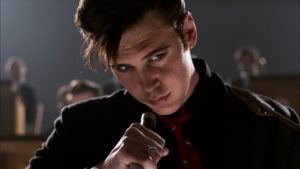
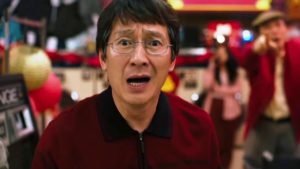
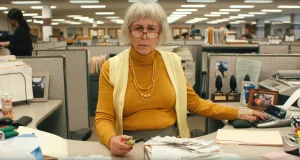
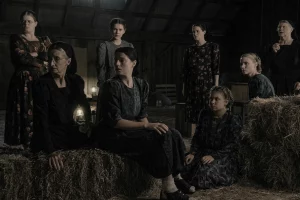
Oh, wait…I did. Maybe not exactly in his words. But I have for a while been saying in this space that the movies have been over going back at least a couple decades, if by “the movies,” you mean the process of theatrical releases shot, cut, dried and shipped fresh to as many exhibitors as can take them, the popcorn blockbusters and the rom-coms, the tentpole franchises and the scruffy horror knockoffs, those that are Searchlights and those that are…Everything Else. The COVID lockdown only accelerated a steep decline in the picture industry’s conventional way of doing business. Once-thriving multiplexes were vanishing from urban and suburban territories as far back as the second Bush administration, if not sooner, making the theaters of the present and foreseeable future boutique businesses. Oddly enough, none of these transitions seems to have adversely affected the Academy Awards. They’re still a TV show and TV, obviously, rules the culture from stream to shining stream. Oscars are a reality show, above all, maybe the very first. And the objective of all reality shows as far back as “Candid Camera” is to catch people in the act of Being Themselves, even in a roomful of people whose expertise is to pretend to be Anything But – unless, of course, somebody gets mad enough to slap somebody silly. And that only happens once in a century. Unless we’re lucky…
This year’s show might be suspenseful enough without meaningless violence. If last year’s Oscars were mostly chalk, this year’s competitions are wide-open…with, maybe, one or two exceptions. The BAFTAs and trade awards have been little help in pre-determining this year’s winners since the choices seem to change with each show…again, with, maybe, one or two exceptions.
So, I’m guessing there’ll be some uncertainty leading up to March 2. The larger uncertainty, however, is the extent to which anybody besides movie buffs and industry people will care up to that point. That’s the thing with TV shows. Doesn’t matter what the reason is for them to be on. They need to get eyeballs above all else and the Golden Globes was smart enough to get Nikki Glazer at the peak of her post-Tom-Brady-celebrity-roast moment to host their shindig. No shade on Conan O’Brien, at least from this corner of the room. But has he told enough short people jokes lately to meet the stringent expectations of a bloodthirsty mass audience needing to Feel Seen? After all this time, the Academy still doesn’t have the guts to let Kevin Hart host their show after all his movies have done for Hollywood. And you have to hand it to Hart because he…never mind. You know the rest.
As usual, predictions are in bold and, whenever I think it’s appropriate, amended with a FWIW (For Whatever It’s Worth) comment.
Another note, now that I’ve got these all written out: I’ve seen way too many of these damn things.
Best Picture Anora The Brutalist A Complete Unknown Conclave Dune: Part Two Emilia Pérez I’m Still Here Nickel Boys The Substance Wicked
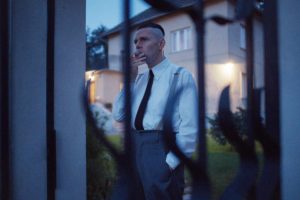
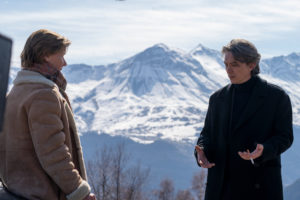
Anora swept up the producers, directors, and writers guild awards in this category, so you’d have to believe it’s All Over, right? But remember that this is the AMPAS and I worry there’s too much T&A from the jump in this movie to rub some older voters the wrong way. Then I think: well, what does “older” mean in an Oscar voter these days? Sixty-something? Seventy-something? I’m 72 now and what my late mother and her sisters would consider “too sexy” or “too racy” isn’t all that “too” for my unapologetically boomer sensibilities. Granted, there are others in my demographic group who feel otherwise, but then there are likely fifty-somethings, or even forty-somethings among Academy voters for whom some of the sequences in Sean Baker’s contemporary fairy-tale-with-toads would be excessively sordid. Assuming that’s the case, where else would these votes go? Early on, it was plausible to believe that Brutalist,Conclave or Complete Unknown would have led the parade, being paradigmatically “prestigious” or “serious” productions.
Consider also that comedies haven’t often won for Best Picture since the 1930s, especially romcoms, (Annie Hall, you say? Maybe the one exception that really makes the rule.) So, at the risk of further spoiling my recent record on this category, I’m taking a shot on a dark horse, even if dark horses have an even poorer track record in this category than comedies. (For rare exceptions, see Crash. Or don’t.)
FWIW: But is Anora a comedy? That’s what everybody’s labeling it, even though I happen to think (and I don’t think I’m alone) that Baker’s story all-too-perfectly captures what those with an overabundance of money and power do to those who struggle to survive along the margins. Of the other candidates on this roster, Nickel Boys may be its closest analogue in this arrogance-of-power thematic context and RaMell Ross’s adaptation of Colson Whitehead’s Pulitzer-winning j’accuse is the most artistically daring of the nominees here. If I’d been an Oscar voter and Kamala Harris had won last November, Nickel Boys would have gotten my endorsement. But because the Other Guy got his ticket punched again, I’d likely go for the one about the lap dancer from Brighton Beach who gets fucked (over) by a Russian oligarch prince. Gruesome as Nickel Boys’ true-life horrors were, at least there was a glint of hope at the end, however belated.
Also: You’d have thought, especially at the outset, that the two musicals on this roster would have garnered much more attention and anticipation by now because they’re, you know, musicals. Emilia Pérez did get a lot of attention, though by no means was it the kind it wanted. As for Wicked, the general suspicion is that Oscar’s withholding its love until the second installment drops next year. Which makes almost as much sense as there being two installments in the first place. The exhibitors likely made this call since the idea of a four-hour-plus musical lumbering through the marketplace seemed illogical given America’s fast-shrinking attention spans, especially the teen-girl target demos. I’m in agreement with those who believe that attention spans in general have two settings: forty seconds and three-to-four hours with nothing whatsoever in between. It could’ve been done for Wicked. But it wasn’t. So those witches will have to wait. At least, one of them may anyway. (See further down.)
Best Director Sean Baker, Anora Brady Corbet, The Brutalist James Mangold, A Complete Unknown Jacques Audiard, Emilia Pérez Coralie Fargeat, The Substance
For a while, this seemed Corbet’s to lose and, despite Baker’s DGA and PGA wins, I think he still could win. His unexpected BAFTA win suggests as much. There’s also a slight chance that Mangold could sneak in from behind, given the good will his movie’s sustained throughout the season. But I’ll follow the producers’ and directors’ leads on this, even with my earlier misgivings as to whether Baker’s movie is too racy to be Best Picture.
Best Actor Adrien Brody, The Brutalist Timothée Chalamet, A Complete Unknown Colman Domingo, Sing Sing Ralph Fiennes, Conclave Sebastian Stan, The Apprentice
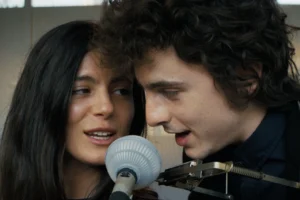
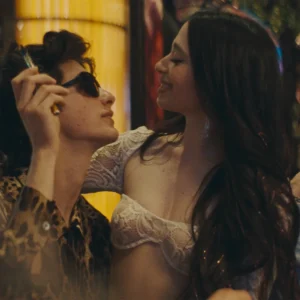
Brody has been securely in front of the pack since his movie’s premiere last fall and there’s been little, if any indication that he’s lost any ground to the competition. Meanwhile, there’s genuine affection out there for Fiennes and his performance, which is one of the slyest and wittiest on-screen turns he’s had in a while. And Chalamet continues to ride a wave of good feeling over his Dylan portrayal, withstanding months of sniping from odd corners about whether his rendering, and the movie’s, are “accurate,” whatever that means. Still thinking it’s Brody’s.
Best Actress Cynthia Erivo, Wicked Karla Sofía Gascón, Emilia Pérez Mikey Madison, Anora Demi Moore, The Substance Fernanda Torres, I’m Still Here
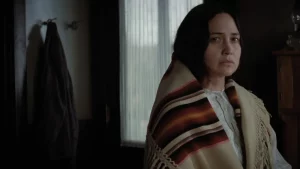
Moore’s moving acceptance speech at the Globes helped raise her movie’s profile, making more people notice how much she went all out in a physically demanding – and distorting – role. The Academy loves it when attractive performers make themselves less attractive in whatever form and so this would seem locked up tight – except for Madison and Torres, the latter of whom has drawn rhapsodies from critics and audiences for her portrayal of a woman who lost her dissident husband in to a right-wing dictatorship in Brazil. Good as Madison is in her movie’s title role, the perception likely will be that her time will come sooner or later, leaving this to be pretty much a Moore-Torres duel to the end.
FWIW: As for Gascón, one wonders whether she’d still be in the hunt if those tweets about George Floyd, the pandemic, Muslims, and other volatile subjects from five years ago had never existed. Or, for that matter, if social media had never existed.
Best Supporting Actor Yura Borisov, Anora Kieran Culkin, A Real Pain Edward Norton, A Complete Unknown Guy Pearce, The Brutalist Jeremy Strong, The Apprentice
An exceptionally strong field has been all but lapped by Culkin, whose performance is one of those ringers that dominate a movie so much that it may as well be a lead role but for the billing. Ignore those chirping sounds you’ve been hearing about Borisov being pulled ahead by Anora’s “momentum.” It doesn’t have that kind of pull and let me repeat, comedies don’t win Best Picture.
Best Supporting Actress Monica Barbaro, A Complete Unknown Ariana Grande, Wicked Felicity Jones, The Brutalist Isabella Rossellini, Conclave Zoe Saldaña, Emilia Pérez
Apparently, Saldaña got through the voting process without the Gascón tweets spilling all over her prospects. If so, this signifies Hollywood showing its appreciation to her for her diligence and energy in and out of the MCU.
FWIW: Grande, however, remains a factor. For whatever reason, she’s the one Wicked principal who’s getting a big push for recognition right now as opposed to waiting till next year. And she’s genuinely magnetic and charming in the movie. No one should be surprised if waiting till next year isn’t the move here.
Best Adapted Screenplay James Mangold and Jay Cocks, A Complete Unknown Peter Straughan, Conclave Jacques Audiard (in collaboration with Thomas Bidegain, Léa Mysius, and Nicolas Livecchi), Emilia Pérez RaMell Ross and Joslyn Barnes, Nickel Boys Clint Bentley and Greg Kwedar; Story by Clint Bentley, Greg Kwedar, Clarence Maclin, and John “Divine G” Whitfield, Sing Sing
If my prediction for a Best Picture upset is realized, Conclave wins this one, too. It may win anyway. But if recent history is any indication, glory in this category has gone to the bold and the Black, and so, I’m going here with my gut – and personal preference. Which aren’t always the same thing.
Best Original Screenplay Sean Baker, Anora Brady Corbet and Mona Fastvold, The Brutalist Jesse Eisenberg, A Real Pain Moritz Binder, Tim Fehlbaum, and Alex David, September 5 Coralie Fargeat, The Substance
Eisenberg’s excellent script notwithstanding, the WGA’s move should get seconded here.
Best Animated Feature Flow Inside Out 2 Memoir of a Snail The Wild Robot Wallace & Gromit: Vengeance Most Fowl
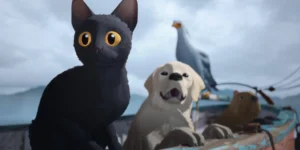
A superb field – with one clear winner, an immediate classic. As I’ve written elsewhere, you know a movie is great when, while watching it, you forget who, where and, at times (like this), even what you are. Flow is a great movie, pound for pound, the year’s best.
Best Documentary Feature Black Box Diaries No Other Land Porcelain War Soundtrack to a Coup D’état Sugarcane
Against formidable odds, No Other Land, the collaborative portrait of Israeli journalist Yuval Abraham and Palestinian activist Basel Adra, has conducted a high-profile campaign for the Oscar despite its lack of a U.S. distributor, which has kept it virtually out of the running for trade awards. This is seen by pundits as an insurmountable handicap, though I’m going to make the archetypical leap-of-faith here and presume that surprises, if not necessarily miracles, can happen this year. The betting favorite, also hyper-charged with topicality, is Porcelain War, a much-decorated account of Ukrainian artists maintaining fidelity to their craft while doing what they can to resist Russian invaders. It’s a theme that sounds like an oozing honey tree for AMPAS voters. But what the hell, I’ll shoot the moon here.
Best International Feature I’m Still Here The Girl With the Needle Emilia Pérez The Seed of the Sacred Fig Flow
Jacques Audiard’s musical gets its reward here, though as in the Best Actress competition, one shouldn’t underestimate the power of I’m Still Here’s theme. Especially these days. I’d pick Flow for a two-fer, but that’s (literally) just me.
Best Cinematography The Brutalist Dune: Part Two Emilia Pérez Maria Nosferatu
Vistavision! Still big! Still bright!! Still somehow Brand New after lo these many years!! Lol Crawley’s got this one sewed up tight.
Best Original Score The Brutalist Conclave Emilia Pérez Wicked The Wild Robot The one qualm about Daniel Blumberg’s chances here is that voters in this category don’t often go for “experimental” composers or, for that matter, the “slabs of sound” approach that sounds as brutalist as the architecture under examination here. But the music is an evocative artifact on its own and too insinuating to ignore, or bypass.
Best Original Song “El Mal,” Emilia Pérez (Music by Clément Ducol and Camille; Lyric by Clément Ducol, Camille and Jacques Audiard) “The Journey,” The Six Triple Eight (Music and lyric by Diane Warren) “Like a Bird,” Sing Sing (Music and Lyric by Abraham Alexander and Adrian Quesada) “Mi Camino,” Emilia Pérez (Music and lyric by Camille and Clément Ducol) “Never Too Late,” Elton John: Never Too Late (Music and lyric by Elton John, Brandi Carlile, Andrew Watt, and Bernie Taupin)
“El Mal” is a stunning performance piece, the whole of Emilia Pérez compressed into one three-and-a-half-minute rant/lament “Mi Camino” also benefits from Selena Gomez’s wistful enactment. I’d like to be wrong, but neither seems like the kind of song Hollywood goes for – and I’ve been burned on this category enough not to trust my inclinations towards the “cutting edge,” no matter who’s won what beforehand. I’m guessing Sir Elton gets another one of these for his mantlepiece, assuming he has one. (A mantlepiece, not an Oscar.)
Comments Off on Seymour Movies Thinks It’s Too Old For This Oscars Shit
Once again, as was the case eight years ago, I find this year’s list to be leaning heavily on women. This time, however, I didn’t plan it that way. It’s just how it happened to work out. I suppose that’s where I’ve invested whatever hope I have for the future, long or short-term.
Nothing else to add, at least for now, except that I couldn’t get to as much out there as I would have liked.
Oh and, as always, these are in no particular order:
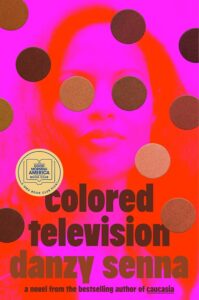
Colored Television – Percival Everett’s James was the Novel of the Year on most lists and, at this writing, it’s nestling in the upper tier of the New York Times Best-Seller List. It deserves every accolade it’s gotten. But so does the latest novel by Everett’s equally accomplished wife, Danzy Senna, who has built her own impressive reputation for acerbic comedies-of-manners as they evolve – or don’t – in the expanding new world of multiracial diversity in the USA. The protagonist of her latest novel is, like its author, a mixed-race novelist and college professor. Her name is Jane Gibson who, with her bohemian artist husband Lenny and their two children, ekes out a life on relatively meagre resources by inhabiting borrowed homes in fashionable SoCal neighborhoods. She puts all her faith and ambition in what she is certain is the Great American Mulatto Novel. (Yes, she prefers “mulatto” to any other term. “’Biracial’ could be any old thing. Korean and Panamanian or Chinese and Egyptian. But a mulatto is always specifically a mulatto.”) When this sprawling tome is spurned by publishers, Jane decides she’s been wasting her energies on literature and, as was the case with generations of writers before her, dives into the gauzy maelstrom of Hollywood screenwriting, specifically by finding space at a writers’ table developing a TV “prestige” sitcom about the “mulatto” experience. The narrative twists, however clever and trenchant, aren’t what keep your head in the game; it’s the streams of zingers, aphorisms, and socio-cultural observations, whether its Jane’s withering assessment of her students’ reading tastes to the mores of hosting her daughter’s birthday party among the L.A. hoi polloi. As a bonus, Senna’s book also serves as a guide not just to navigating one’s way through a multi-culti life, but to writing itself. And, for that matter, teaching writing. (“You couldn’t teach a student by assigning Toni Morrison, it would only create bad imitations.”) Laugh, and learn.
Sally Jenkins – So many of my friends dropped their Washington Post subscriptions after Jeff Bezos’s non-endorsement for president. While understanding the impulse, I insisted that, however exasperating the Post’s direction on this and other matters, there were still people working there who needed and merited our abiding support. Without the Post, for instance, you’d deprive yourself of beholding a great American sportswriter in the midst of a ferocious hot streak. Jenkins has over decades sustained a level of performance as awe-inspiring as any of the superstar athletes she writes about, whether she’s unspooling long-form pieces like the panoramic, vividly rendered account of legendary bull rider J.B. Mauney’s decelerated-but-still-engaged life after a broken neck or firing column after column taking dead solid aim at Received Wisdom wherever it’s stinking up the joint. She places the blame for the hot mess college athletics have become on the institutions that forget or ignore their educational missions. She was laser-like in deconstructing police overreaction to a pregame traffic infraction by Miami Dolphins receiver Tyreek Hill (“…a needless escalation not because of Hill’s conduct, but that of those chesty cops, their belts jingling with tools of submission and voices that demanded bootlicks…”). While the Tom Brady roast delighted millions, Jenkins was decidedly not amused by the “hammy punchlines that fell like refrigerators hitting sidewalks.” And she was, as usual, smarter than almost everybody else in her field when assessing Bill Belichick’s decision to forsake the klieg-light glare of the NFL for the NCAA: “Belichick’s longtime permafrost barrier is less about aloofness than about his suspicion of the corrosive effects of popularity.” Jenkins has been a perennial finalist for the Pulitzer Prize, and I thought her engrossing, deeply moving 2023 takeout on the bond between Chris Evert-Martina Navratilova should have finally put her over the top. Then again, she doesn’t need anybody’s prizes to certify her preeminence – not as much as you need to pay more attention to her day-to-day output.
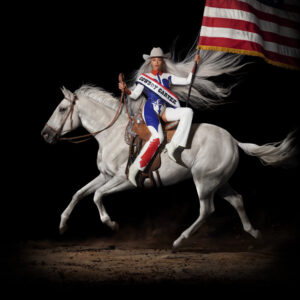
Beyonce, Cowboy Carter (Parkwood/Columbia) – So who needs the CMA anyway? Those are for country-&-western albums, and this was the kind of pure pop product that took in too many multitudes to be contained by any genre. More than anything, as many others pointed out, Beyonce herself was, and is, her own genre. And whatever this album’s head-swiveling popularity and impact on the marketplace and its multiple platforms, I don’t think enough was made of Ms. Knowles’s valiant determination to declare that she, too, sings America – as if the opening track, “American Requiem” didn’t forcefully assert such intention. Nothing about this Mother of All Crossover Projects felt strained or overstuffed – except, maybe, for the Texas radio station motif that almost wore out its welcome. Overall, it’s a cordial, enthusiastic house party with an eclectic guest list (Miley Cyrus, Shaboozey, Stevie Wonder, Paul McCartney, Tanner Adell, Rhiannon Giddens, Willie Nelson, Jon Baptiste, Linda Martell, among others) and a generosity of spirit that makes the album’s nay-sayers seem even pettier — and more bewildering. The election results have too many convinced that the country’s regressing deeper into the swamps of polarization. But I think Cowboy Carter’s arrival is the clearest indication we have this year that the wider, more diverse world the reactionaries are so afraid of has already arrived – and isn’t going anywhere anytime soon.
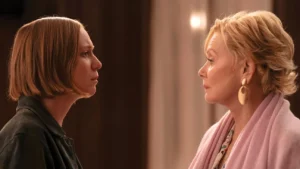
Hacks – Somehow you knew that the perverse bond between Vegas standup comedy institution Deborah Vance (Jean Smart) and her on-and-off-again muse-for-hire Ava Daniels (Hannah Einbinder) was going to need more than just two seasons to evolve. And the third and best season of this series raised the stakes in bringing this oddest of odd couples back together after Deborah cut Ava loose (supposedly) for the latter’s own sake. And it seems, for a time, to have worked out, with Deborah riding a wave of popularity with newer younger audiences who’ve seen her unexpected Netflix hit and Ava scoring a dream gig writing for a satiric news digest. But when the late-night hosting job of Deborah’s long-deferred dreams suddenly becomes attainable, she decides that only Ava’s writing can deliver her to the finish line. So, for better and worse, they reconnect with their respective insecurities and unruly yearnings entwined once again in a fitful tango of codependence and ambition. The sometimes-sordid things they do along the way to get what they want smacks around our sympathies. But there are too damn many things in the culture that pander to simplistic good/evil dualities. Ava’s moments of insight and compassion may not always arrive in a timely manner, but when they do, you wish you could hire her for some odd jobs around the office. And it’s hard to stay mad at Deborah when she makes this rationale for her heat-seeking campaign: “Anything I want to do I have to do it now. Or else I’ll never do it. That’s the worst part about getting older.” No pathos here. Just another shot of raw, aching truth that’ll keep us coming back to these fascinating, damaged women.
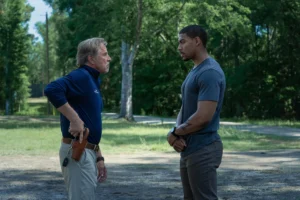
Rebel Ridge – I started watching this on Netflix after several people I trust urged me to do so. When it began with an innocent, unarmed Black man on a bicycle getting rousted and harassed by small-town white men in uniform, I thought: Do I really need to go through this mess again (especially this year, or this decade?) But it didn’t take long for Jeremy Saulnier’s contemporary western to pull me all the way in. Which says a lot, given how totally done I’ve become with this kind of drama (especially in real life). The movie is not only smart about orchestrating its martial arts sequences and chase montages, but also about the jujitsu of legal procedure and the pressure points that won’t always, or easily, submit to the bully-bro tactics of overentitled cops. One more thing: Aaron Pierre, as the unstoppable marine vet kicking ass for justice, is a bona fide star and I hope the Green Lantern franchise, such as it is, treats him much better than it did Ryan Reynolds.
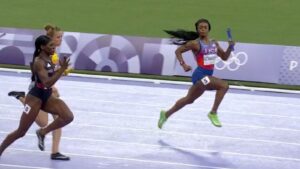
The Paris Olympics – They had me, literally, at hello with Celine Dion’s spectral performance of “Hymne a L’Amour” climaxing a moist, stirring opening ceremony. Dion’s spellbinding resolve was sustained in the steely “I’m Baaack!” sang-froid of Simone Biles throughout the women’s gymnastics competition, whether dispatching the competition or supporting her teammates. The men’s basketball competition honored the elder generation of superstars like LeBron James and Stephan Curry while also acting as a showcase for NextGen stars like France’s Victor Wembanyana and Japan’s Kawamura Yuki. Much was made of Katey Ledecky’s four-pack of swimming medals, and even more was made by the pool of local hero “King” (or is it “Roi”?) Leon Marchand. But as always, I was especially riveted to track-and-field, especially the American women sprinters. If there’s one YouTube clip that I never get tired of watching from the games, it’s of Sha ‘Carri Richardson’s come-from-behind anchor leg of the 4X100-meter relay. That millisecond before she breaks the tape is the best victory glance at the competition since Secretariat’s jockey Ron Turcotte sneaked an over-the-shoulder look at how far ahead they were in the 1973 Belmont Stakes.
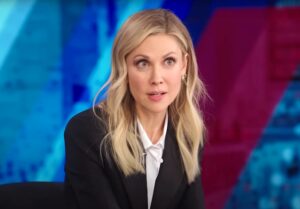
Desi Lydic – The big story with The Daily Show this year was Jon Stewart’s return to the anchor desk, albeit in a more limited role. With characteristic generosity, Stewart’s still ceding lots of space to the show’s rotating anchors who have been doing just fine without him. They’re all great, but I think Lydic, who joined the franchise back in 2015, has become one of its stealth weapons. And it’s not just because she had the season’s single best zinger, aimed in Tucker Carlson’s direction the day he was dismissed from Fox News. I’m thinking of a relatively routine night for the show, when she surgically took apart what was supposed to be a major policy address by the once-and-future-president on health care and laid out its sloppy, threadbare components for all to see and hear. I turned on the radio and television the morning after waiting for somebody, anybody else to apply even a little of Lydic’s scorched-earth skepticism and deconstruction to this speech. Crickets. At least, that’s all I’d heard. This, by default, made her my favorite broadcast journalist of the 2024 campaign with no one else even close. I’m not expecting the next couple years (at least) to be fun. But I’m at least encouraged that Lydic will still be ready to apply the scythe and flares to Trump’s foggier rhetoric — if “rhetoric” is what you can call it.
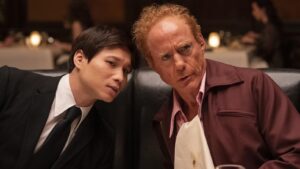
The Sympathizer– The culture-at-large is in love with international intrigue to a degree that it hasn’t been since the mid-20th century days of Counterinsurgency, Sean Connery’s 007, and Mutually Assured Destruction. A partial, up-to-date list of global duplicity to be found on streams includes Black Doves, The Agency, Day of the Jackal, The Diplomat, Lioness, and Slow Horses, the latter of which I am so devoted to that I inhale the Mick Herron novels so I can stay out in front of whatever happens to its motley crew of misfits after each of the series’ four seasons. But even that show hasn’t messed with my head like the HBO adaptation of Viet Thanh Nguyen’s award-winning novel, set during and after the Vietnam War, about the perilous destiny of a double agent (a most excellent Hoa Xuande) spying for the communist North while serving as an officer with the South’s army. The novel claims both Ralph Ellison and John Le Carré as its guiding spirits and the series is more faithful to Nguyen’s dark seriocomic narrative than the agent, known only as The Captain, is to either of his warring masters. He carries his divided soul with him after the Fall of Saigon to late-1970s Los Angeles where the war goes on among his fellow refugees, notably his onetime general (Toan Le), now a liquor-store owner still dreaming of somehow reversing the war’s outcome. Robert Downey Jr., one of the show’s executive producers, plays (riotously) multiple roles as white men with undue, malign influence on The Captain’s life, including a sybaritic CIA cowboy, a doltish California congressman, and a megalomaniacal filmmaker using the Captain for technical advice on a Vietnam War epic. Some viewers complained about the story’s multiple time-shifts and how the narrative didn’t always play fair with the Captain’s motivations – and everybody else’s. All of which, of course, was what I liked most about it.
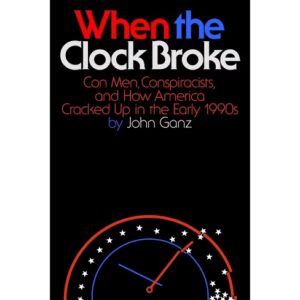
When The Clock Broke –John Ganz’s account of the 1992 presidential campaign was published three days before Joe Biden announced his withdrawal from the presidential race and declared support for his vice president Kamala Harris. The convergence now seems like ages ago, especially when one remembers how suddenly plausible it seemed at that moment that the election results would signal the end — or at least the beginning of the end – of the dismal era that Ganz contends was set in motion by the tempest of reactionary resentment and populist rage abetted by such luminaries of the era as Ross Perot, Pat Buchanan, David Duke, Daryl Gates, Rudy Giuliani, Rush Limbaugh, and others. So omnipresent was this force that even the election’s eventual winner Bill Clinton pandered to it by hanging Black rapper-activist Sister Souljah out to dry in public. Ganz’s mordant, thorough account spares no one in complicity and even brings in John “The Dapper Don” Gotti as a tabloid paradigm of the mob capo as authoritarian ideal. As I wrote this past summer, you’ll find just about everything there is to say about how we ended up in this perilous time for our democratic republic; everything, that is, except a clearly marked exit.
Zoe Saldana – As more than one of my friends insist, there’s nobody better than Saldana at evoking the state of being sick-and-tired-of-everybody-else’s-bullshit, especially when, as the CIA commando in Lioness known as Joe McNamara, she has to be Tough Mommy to her daughters in split-level Virginia and to the grimy, smart-alecky roughnecks she leads into morally ambiguous dark-ops missions. Her character in Emilia Perez is scarcely under less pressure than Joe; she’s a Mexico City lawyer recruited by a notorious drug cartel leader to help navigate his safe passage to a new life as a woman. In both cases, Saldana is a flash point, barely keeping rage and hysteria at bay. She not always at the center of things, but nothing consequential happens, good or bad, without her. While I yearn for the cooler, drier archetype of existential heroism I grew up with, Saldana’s mercurial, intense variation somehow feels closer to where our heads should be now: doing whatever it takes to get through whatever perils get dumped in our pathway
Comments Off on Gene Seymour’s Favorite Things in 2024
The one thing I can still remember poor Jo Koy saying at his much-derided hosting stint at this year’s Golden Globe Awards came at the very end when he exulted, “Hollywood is back!” Not even crickets could be heard acknowledging this statement, which made me, at least, wonder whether even Hollywood thinks it’s back. A Socratic temperament might press for terms to be defined: What do you mean by “Hollywood”? What do you mean by “back”? “Back” from what? From COVID? From the contract disputes? From the looming specter of A.I.? And is this what being “back” looks like?
It is a certainty that all those who work in the Factory of Dreams are back at their jobs, which means they can campaign and vote in all their various trade competitions leading up to the Academy Awards. But if by “Hollywood,” you mean, the “screwy, ballyhooey Hollywood” of klieg lights, big screens, and its ersatz royalty of big stars…well, only a sentimental naïf wouldn’t have by now figured out that gossamer myth dissipated into the ozone several decades ago and whatever tiny fragments remain are deflating hour by hour in a post-Millennial universe where, as somebody on the recently-completed fifth season of FX’s Fargo might put it, we all get to create our own reality while feeling empowered to throw big, sharp rocks at everybody else’s.
How can any movie, Hollywood or independent, presume to grab a lion’s share of a consensus audience in a determinedly fragmented world like ours? For a while this past summer, Barbie appeared to have pulled it off triumphantly enough to have given Warner Bros. a breathtaking surge in its profit margin. But before long, we stopped having serious fun with the movie and started getting frivolously solemn over whether it was OK to enjoy ourselves so much over such a conspicuous, if cheekily self-referential example of “product placement.” And we’re still arguing about it with one side of the room grousing about Oscar keeping both the movie’s star Margot Robbie and its director Greta Gerwig out of the running while others bloviate about arrested development and whether the whole thing was post-feminist or post-post-feminist, or yet another marker in civilization’s dreary slouch towards Bethlehem.
I shall, of course, deal further with Barbie in the text below. As far as how I liked it, I need only quote the indispensable cultural critic Robert Warshow who is famous for saying the following: “A man watches Barbie, and the critic must acknowledge that he is that man.” OK, I made up the Barbie part. But somehow the original quote, a standby among cinephiles for generations, makes more sense when put this way, at least to me.
The critic that I like to think I still am enjoys the ongoing threads and conversations as they unspool on various platforms. But conversation, after a while, gives way to a kind of annoying “know-it-all”-ism requiring nothing more than loud, emphatic assertions of opinion with little to no room for challenges or even questions from the floor. Often, it’s jaded contrarianism without portfolio (literally) as if standing in opposition to the crowd, or merely believing that you do, is all you need to bring to the microphone. I want more than that. And we should, too, without worrying about how our opinions look to others and how our judgments will be judged in turn.
And if we do like something that everybody else likes, we shouldn’t have to apologize for it in the same way we shouldn’t have to apologize for liking things nobody else cares for. All that is part of what used to be the romance of moviegoing and in romance, looking or feeling foolish is always a liability. But you don’t move anywhere without such risks and neither does art. If we could stop being so self-conscious about what we wear in the digi-verse, we could all come back to the rapture we felt when we first sat down in a dark room waiting for transport. The movies, as we knew them, could truly be “back” – and so, maybe, could Hollywood.
Wait for it…wait for it…
Naaaah!
You know the drill by now. Projected winners are in bold and FWIW (For Whatever It’s Worth) asides will follow some predictions, as needed.
Best Picture
American Fiction Anatomy of a Fall Barbie The Holdovers Killers of the Flower Moon Maestro Oppenheimer Past Lives Poor Things The Zone of Interest
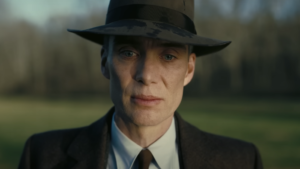
As Barbie continued to dominate industry chatter well into the new year, I wondered whether Academy voters would do the Wild Thang (sic) and give it the top prize, partly to mollify those who think director Greta Gerwig and lead actress Margot Robbie got skunked out of nominations and mostly to give props to its galvanic impact on the Almighty Bottom Line. But devoted followers of this site will recall that a year ago, I believed Top Gun: Maverick would reap voters’ good will for its olly-olly-oxen-free shoutout to audiences that it was not only safe, but mandatory to return to the multiplexes in the pandemic’s wake. I’m not making that mistake a second time. Oppenheimer fits the Oscar prototype for a major movie whose significance surfaces before the movie even begins. The same can be said, even more so, for Scorsese’s Good Fellas of the Purple Sage (my own name for it and I mean no disrespect.). Voters have tended to seek the comfort of Big Important Topics as a way of putting the industry’s best possible face forward into its future. I’m opting now for the one whose importance would have been timelier back in the 1980s in the last tense days of the Cold War. But never mind. Right now, its front-runner status here is secure, even after more than half a year.
FWIW: Despite pundits’ best efforts to coax this year’s categories into wire-to-wire finishes (as they are prone to do), I suspect this is one of those Years of Foregone Conclusions as far as handicapping Oscars is concerned. In other words, chalk is your wisest investment. The past year has so exhausted the industry that it’s hard to imagine any of the nominated films, their casts and crews suddenly catching fire towards the finish line. There’s been enough excitement from all these shutdowns and strikes this past year, thank you very much. Let’s just worry about catching up and getting back to whatever this New Normal in the industry is concerned because there’s an awful lot of stuff to make everybody nervous about the future. So, who needs horse races? Let’s leave them to actual horses.
In case anybody’s interested, Poor Things would get my vote, simply because I had a blast watching all that grotesque slapstick and baroque comedy slithering out of the screen like tentacles. Yorgos Lanthimos’ movie goes about its sticky, gnarly business the way Willem Dafoe’s deformed Doc Baxter went about his: so absorbed in its own process as to be coolly indifferent to the effect it’s having on its incredulous onlookers. It won’t win here, but I’m tickled that I saw it if for no other reason that it gives me added incentive to actually read more Alastair Grey this year. Lanark, I think.
Best Director
Jonathan Grazer, The Zone of Interest Yorgos Lanthimos, Poor Things Christopher Nolan, Oppenheimer Martin Scorsese, Killers of the Flower Moon Justine Triet, Anatomy of a Fall
Nolan has been so routinely unpopular with segments of the critical community (not an oxymoron) that I sometimes think his haters invent reasons not to like any of his movies, even when they work well. With me, it’s always been case by case. Liked Insomnia. Hated Tenet. Admired, without loving, Dunkirk. Loved, without admiring, Interstellar. And on and on. With other directors, as well as craftspeople in various disciplines, it’s a different story. They’ve likely been waiting for just the right moment to give him a party favor and if he doesn’t get it for this one, it’s hard to imagine another chance coming up. Except that directors like him outlast almost everybody else, even, and especially, critics like us.
Best Actress
Annette Bening, Nyad Lily Gladstone, Killers of the Flower Moon Sandra Hüller, Anatomy of a Fall Carey Mulligan, Maestro Emma Stone, Poor Things
All these contenders went all-out in their performances, and each would have been sure bets in other years with weaker competition. History, however, is opening a wide, clear path for Gladstone to repeat Michelle Yeoh’s coup of a year ago by becoming the first Indigenous American to win a lead-acting Oscar. And, as with Yeoh’s becoming the first Asian-American last year, Gladstone has earned it.
FWIW: Still, part of me wishes I could airlift Bening’s nomination to another year with weaker competition. I thought she deserved to win 13 years ago for The Kids Are Alright, which was her fourth and, till now, most recent Oscar bid in more than 30 years. She’s not quite Glenn Close as far as hard-luck Oscar nominees go, but one fears she’s getting there.
Best Actor
Bradley Cooper, Maestro Colman Domingo, Rustin Paul Giamatti, The Holdovers Cillian Murphy, Oppenheimer Jeffrey Wright, American Fiction
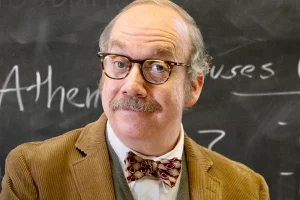
People look at Holdovers’ promotions and all they can see and hear are other, lesser nostalgic prep school comedies with cranky adults buddying up with drippy students; the most notable example brought up is 1992’s Scent of a Woman, which finally got Al Pacino his Oscar well into the “She’s-got-a-GREAT-ass!” phase of his career. This essay by Olivia Rutigliano says everything that needs saying about why both the movie and Giamatti’s performance are different – and why he’ll be rewarded for it.
FWIW (2/25/24): Or maybe not. Murphy’s SAG and BAFTA awards, in swift succession, now make him the prohibitive favorite — and the movie’s cast award can only accelerate his movie’s chances for a Oscar night sweep.
Best Supporting Actress
Emily Blunt, Oppenheimer Danielle Brooks, The Color Purple America Ferrara, Barbie Jodie Foster, Nyad Da’Vine Joy Randolph, The Holdovers
Randolph’s already a front-runner, principally because she so deftly conveys the complex, mercurial nature of loss, a theme that makes the movie stand out from others in its sub-genre. Also, the way her character’s aching vulnerability is contained beneath dry, if pliable layers.
FWIW: I still wish there were a way to train more attention on some of the other worthy nominees here, especially Ferrara, who to my mind had an even greater challenge in her overall characterization than the people playing dolls.
Best Supporting Actor
Sterling K. Brown, American Fiction Robert De Niro, Killers of the Flower Moon Robert Downey Jr., Oppenheimer Ryan Gosling, Barbie Mark Ruffalo, Poor Things
I see this as, essentially, Iron Man vs. The Hulk. Iron Man wins.
FWIW: If Wright hadn’t been nominated for Best Actor, I would have liked to see his vulpine rendition of Adam Clayton Powell Jr. in Rustin given its due here. Problem is, everybody else in this category is so formidable that there wouldn’t have been any room for his nomination.
Best Adapted Screenplay
American Fiction Barbie Oppenheimer Poor Things The Zone of Interest
In case you’re still wondering what Barbie is doing here, this will provide the (illogical, unsatisfying) answer. Whichever category it landed in, the script would have been well-positioned to allow co-writer Gerwig to get the statue for which director Gerwig wasn’t allowed to compete. Too bad in a way because the other “Adapted” nominees are all especially worthy contenders…
FWIW: …especially Cord Jefferson’s script for American Fiction. Even though he’s been scolded by some for paring down the serrated edges of his source material (Percival Everett’s acerbic satire Erasure), he managed to fashion an all-too rare and persuasively level-headed depiction of an upper middle class Black family, balanced, humane, and still witty enough to stand out from anything that came beforehand, if you can think of what that could be.
Best Original Screenplay
Anatomy of a Fall The Holdovers Maestro May December Past Lives
David Hemingson’s script for Holdovers isn’t perfect. But it makes for the kind of movie that holds its elements loosely enough for voters to cozy up to. Story, structure (of a sort), snappy dialogue, emotional impact. It checks enough boxes to breeze through here.
FWIW: Then again, there’s always the (very slight) chance that a sleeper like Past Lives could ease its way to the front of the pack for having greater, if subtler emotional weight.
Best International Feature
Io Capitano Perfect Days Society of the Snow The Teachers Lounge The Zone of Interest
Great Britain’s entry is Jonathan Glaser’s chilling, prize-winning depiction of the banality of evil near one of the Nazi death camps. As with recent winners in this category, it also has a Best Picture nomination, which usually means an inevitable win here.
Best Animated Feature
The Boy and the Heron Elemental Nimona Robot Dreams Spider-Man: Across the Spider-Verse
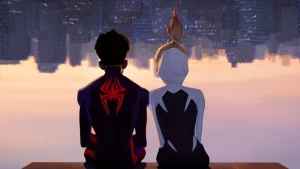
By far, the most competitive race on the docket with predictions weaving back and forth between the new meta-Spidey adventure and Hayao Miyazaki’s Boy and the Heron, the latter of which has already collected a Globe along a rasher of critics’ prizes. The other three, including Diz-Pix’s latest, could legitimately be regarded as classics, especially the smart and daring medieval/urban fantasy Nimona, which almost didn’t make it into any kind of distribution. Even with the Marvel Cinematic Universe (MCU) edging towards eclipse at the moment, I’m going to put my chips on Miles Morales, even though it’s plausible that Oscar will wait for the third installment of that series to drop before full acknowledgment.
Best Documentary Feature
Bobi Wine: The People’s President The Eternal Memory Four Daughters To Kill a Tiger 20 Days in Mariupol
Each of these selections carries enough urgency in their socio-political themes to illuminate a whole nation state. All of them deserve to win and any of them could. I’m betting on the AP/Frontline entry whose depiction of a Ukraine city under siege is wrenchingly, frighteningly intimate in its accumulation of raw detail.
Best Cinematography
El Conde Killers of the Flower Moon Maestro Oppenheimer Poor Things
The relentless march of Oppenheimer ensures that Hoyte Van Hoytema will likely get his first Oscar after his previous work with Nolan’s Dunkirk and Interstellar was nominated but did not win (NBDNW). It’s by no means a lock, but…
Best Original Score
American Fiction Indiana Jones and the Dial of Destiny Killers of the Flower Moon Oppenheimer Poor Things
Of course, I would love it if Robbie Robertson would get some posthumous love for his haunting, old-weird-America score for Killers; his interludes fit so seamlessly with the scratchy, tinny archival recordings weaved into the soundtrack that you almost believe it all came from the same old 78-RPM records. But it’s easier to imagine Ludwig Göransson’s second win being part of the Oppenheimer wave.
Best Song
“The Fire Inside” (from Flamin’ Hot) “I’m Just Ken” (from Barbie) “It Never Went Away” (from American Symphony) “Wahzhazhe” (from Killers of the Flower Moon) “What Was I Made For?” (from Barbie)
Outside of production design, this has to be the only sure bet on the table for Barbie, plus it’s already nabbed a Grammy for Song of the Year.
Comments Off on Seymour Movies: Oscar’s Chalkiest Year
The preponderance of books and television series cited below suggests that I still don’t get out as much as I should. And while COVID isn’t going away (and did, in fact, bite me sometime earlier in the year), there’s still so much to behold in person as opposed to a screen. Or a page.
Still, I did, for the record, travel more than usual in 2023, mostly to northwesterly places on the continent where I saw bears, moose, elk, glaciers, and geysers. By my count, I still have twelve states in the union to visit in my lifetime and sustain the hope, however faintly it is articulated these days, that there will still be a union for as long as I hope to live.
Still.
If democracy is under siege and things are as bad as cable news networks insist (I don’t think they are, but that’s another discussion for another time), it’s not because culture failed us. The items below, even though they represent a relative sliver of what’s available, all tell eternal truths in up-to-the-minute fashion. Even when they depressed me, they gave me hope. So, the lesson here is a clear one: Stop watching cable news. Watch and – especially, for the love of God – read stuff like this. You’ll feel better. You’ll know more. That’s the best I can say. The rest, especially in 2024, is up to you.
Once again, these are in no particular order:
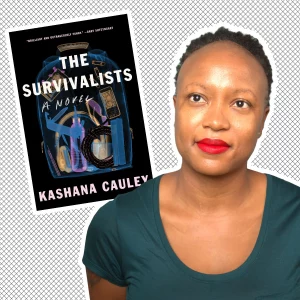
The Survivalists – Another outstanding year for African American fiction – and, at this point (for varied reasons), why don’t we just say, “American fiction,” period? – began with this silken-swift comedy of manners that’s as dark, rich, and intensely stimulating as the gourmet coffee that, along with heavy artillery, is a major trope in Kashana Cauley’s novel. Its central character is Aretha, a fast-tracking corporate attorney whose peripatetic love life seems finally to have found mooring with Aaron, the dashing founder-proprietor of Terminal Coffee, which roasts and sells coffee from his home base in Brooklyn’s Fort Greene neighborhood. Beyond mutual infatuation, Aretha and Aaron are such kindred spirits in their droll hipness, Type-A impulses, and wily diffidence that she moves into the commodious old rowhouse he shares with two somewhat singular housemates: Brittany, a churlish, taciturn “Angry Flo-Jo” who’s responsible for assembling the backyard bunker, and James, a sullen, pallid ex-reporter fired from the Washington Post for plagiarism. It turns out this motley band is warehousing more than coffee beans. There’s also a deep, wide stash of guns and ammo, part of which they’re hoarding as protection from an as-yet unspecified urban apocalypse while the rest is being sold to all manner of dubious buyers in the Tri-State area. Aretha at first keeps a respectful distance from the gunrunning business. But when her hitherto upward trajectory towards full partnership hits the ceiling, Aretha throws herself into Terminal Coffee’s off-the-books operations – and becomes scary-good at it. Cauley, herself a lapsed attorney who was once a Daily Show staff writer, nails down rueful insights about cultivating high ambitions in cloistered times and tallies the ironies in striving for space in a future you otherwise fear and loathe. In other words, it’s about living one’s best possible life near the upper reaches (and below the radar) in the 21st century.
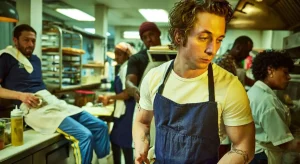
The Bear – I’m going to imagine that at some point during the filming of the second season of The Bear that the ghost of John Cassavetes somehow made it to the Chicago locations where the series was being shot. He (it?) likely felt very much at home, especially within the intimate, more ramshackle surroundings like the restaurant kitchen being ripped apart to make room for a newer, sleeker, higher-end eatery than the one it’s replacing. So much of him yearns to assume corporeal form even for a minute or two, if only to offer advice, encouragement, maybe a few suggestions, once he can find out the storyline, the schedule, and what the theatrical specifications are. First off, he probably can’t believe this is all being made for television. Then, with sheer wonder, he thinks: These kids really know what they’re doing. He is especially galvanized by Ayo Edebiri, who plays the precocious young chef Sydney. Despite her age, she seems the wisest, worldliest person among her stressed-out colleagues; except for those times when she isn’t, and her own insecurities come at her from unexpected places, like muggers in dark alleys. His attitudes towards The Bear’s male leads are more complicated. With both, it’s like staring at a looking glass. Jeremy Allan White’s portrayal of Carmen (“Carmy” or sometimes just “Carm”) Berzato, the perpetually frustrated genius-chef stalked by guilt, haunted by death, keeping fear of failure at bay, is the kind of soulful, belligerent savant Cassavetes used to play all the time. He’d have nailed his role down like an iron fencepost back in his day. The other guy, Richie (Ebon Moss-Bachrach), Carmen’s best bud and restaurant manager, is also a role made for him, meaning the self-sabotaging stick-of-dynamite with the short fuse who needs just one more thing to go south for him to blow himself up and everybody else with him. All these three kids with dreams way bigger than they can carry without tripping on the curb are magnificent creations. But Cassavetes knows they’re not even all of it; it’s also the family background, which all comes to a head in that bravura Christmas episode with the Feast of the Seven Fishes. The ghost thinks: That was something I could have never pulled off the way they did. It managed to fire all over the place and still come through ferociously contained. And besides, Cassavetes thinks, even I wouldn’t have had the stones to end the whole episode with the mother driving a car through the living room. And that the mother was played by somebody you only gradually recognize as Jamie Lee Curtis, but in another time and place, could have easily been Gena Rowlands.
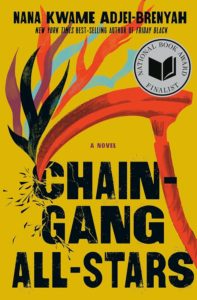
The Chain Gang All-Stars– I’ll admit it. There’s this teeny, microbe-sized Imp-of-the-Perverse way down deep inside me that’s tempted to wonder, if for no more than a nanosecond, whether the alternate universe depicted in Nana Kwame Adjei-Brenyah’s ingeniously dystopian first novel is onto something: that giving the most abject violent criminals in custody the option of fighting televised duels-to-the-death would be something of a win-win situation for them and for a society that can’t get enough of real-world violent spectacle. Before you judge me, you should know that at least one reviewer of Adjei-Breyah novel opened the piece by asking whether he was having too much fun reading about a world in which there is such a thing as a Criminal Action Penal Entertainment (CAPE) program and that such a world could all too easily adapt its moral compass to take in pay-per-view packages showing wanton, all-out bloodshed between otherwise doomed convicts, some with their own fan bases and merchandise. It may not be the kind of thing I’d shell out my hard-earned streaming dollars for, but the fact that I can imagine as easily as Adjei-Brenyah does fans of all ages having wall-poster-sized devotion to gladiators like Loretta Thurwar and Hamara Stacker a.k.a. “Hurricane Staxx,” who, inconveniently, are lovers as well as competitors. In addition to these awkward situations, Adjei-Brenyah is conscientious enough in his world-building to conceive a web of corporate enablers of his madness from all-sports cable networks to the incarceration industrial complex (which is what I’m calling it this week anyway). The heretics travel along with a protest movement stalking the CAPE caravan at every stop on its tour, making some of the arguments you can hear in “real life” about the malign growth of the private prison industry and the seemingly impermeable hold that mandatory sentencing, capital punishment, wrongful convictions, solitary confinement, and other, similar aspects of the “real” legal system has on those who want their loves ones protected. At what point, one asks, does “safety” itself become its own kind of prison? Part of Adjei-Brenyah’s purpose is to arouse such self-interrogations in his readers – who, in turn, could subdue their own meaner instincts enough to ask more questions of our society and ourselves. So you can question your fears…
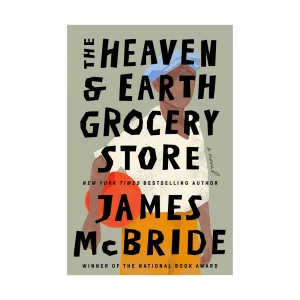
The Heaven & Earth Grocery Store – …or you can engage with your hopes. We were as urgently in need of James McBride’s depiction of collective strength and courage in the 20th century as we were of Adjei-Brenyah’s more acerbic alternate vision of the 21st. McBride follows up his 2020 triumph, Deacon King Kong, with another exuberantly polyphonic novel in which a community, if not the notion of “community” itself, is the protagonist. It’s a murder mystery set off in 1972 by the discovery of a skeleton, along with a mezuzah, found at the bottom of a well in the Chicken Hill section of Pottstown, Pennsylvania, once a lively, tumble-down community of mostly Jewish and African American residents. The narrative steps back more than 40 years before when Moshe Ludlow, a Romanian Jew owned and operated a theater and dance hall while his American-born wife Chona ran the eponymous grocery store nearby. Events are set in motion when Nate Timblin, a Black employee at Moshe’s theater, asks the couple to shield an orphaned and deaf 12-year-old boy child Dodo from state officials seeking his institutionalization. Moshe is reluctant, but Chona, a woman of deep compassion and iron will, insists, despite threats, explicit and otherwise, from the city’s white power structure, many of whose members disdain the easy-does-it interaction between Chicken Hill’s ethnic minorities to the point of taking part in Ku Klux Klan parades. In clumsier, hammier hands than McBride’s, this is the kind of story whose melodramatic elements can be ramped to needless excess. But here, as McBride’s previous work, it is his exquisite sense of tone, timing, humor, and nuance that allows the novel to earn our tears — and our faith in each other, whenever we need it.
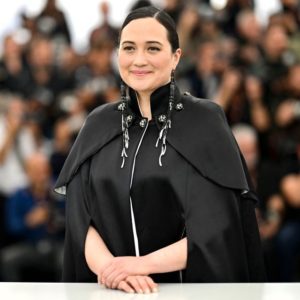
Lily Gladstone – Screen stars always emit a field of magnetism that at once draws us in and keeps us at a distance. With Gladstone, these warring elements somehow merge into an aura of repose that’s eerie to behold. Her less-is-more triumph in Killers of the Flower Moon is powerful and dominant enough on its own elemental terms as to all but redefine the very nature of bravura performance. She is a virtuoso of stillness in ways that harken all the way back, if you can imagine it, to Buster Keaton and other silent-movie icons. And not even they could convey with their faces whole landscapes whose emotional weather systems can shift from wary to vulnerable to kittenish to sensual to bemused, braced throughout by resilience whose sources are probably a mystery even to her. Perhaps one way to account for this composure is Gladstone’s portrayal of Hotki in Reservation Dogs. As jail-bound mother to Danny, whose suicide pitches the series’ teenaged characters into upheaval, anxiety, and confusion, Hotki has distanced herself emotionally and otherwise from everyone in her family except for her niece Willie Jack. When in the series finale Willie Jack brings Hotki an “offering” of snacks and sodas, the “auntie” summons the spirits of the ancestors passing on to the younger woman the obligation of looking after the friends and family members most in need. Once again, a majestic act carried out with understated humor and minimal flourish. She’s a trickster goddess with more surprises in store for us.
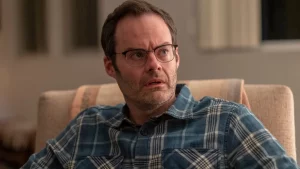
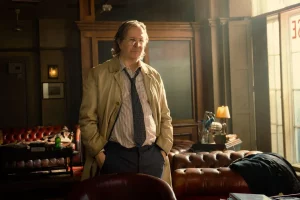
Barry – Of the hustlers, victims, losers, loners, narcissists, innocent passersby, and low-life sharpies making their way through four seasons of auteur-star Bill Hader’s inky, deadpan tragicomedy, none was as manipulative or as disingenuous as Monroe Fuches (the amazing Stephen Root), friend-mentor of Hader’s Barry Berkman, the mentally-unbalanced ex-GI who was guided by Fuches through an underground career of lucrative assassination before Barry decided he’d rather be a professional actor. Towards the conclusion of this so-dazzling-it-physically-hurt-to-watch-it season, Fuches, who emerged as something of a crime capo following some hard prison time, confronts his Chechen counterpart Noho Hank (Anthony Carrigan), whose bumptious naivete was darkened and deflated when he was forced by his own bosses to abet his lover’s murder. Now Hank and Fuches are haggling over who gets to kill Barry. (The “why” would take too long to get into here, requiring a rehash of Dostoyevskian proportions). It’s enough to say that Fuches, perhaps more than any other character in the whole sordid story, has arrived at something close to a complete reckoning for his many abysmal acts and is best able to assess where he’s landed in life. And why:
“I used to think I was a soldier, ignoring the fact that I never fought a battle in my whole life. I was a poseur. And I thought myself a mentor fostering other men’s natural abilities. But it wasn’t until I was in prison, and I got beaten to within an inch of my life day after day that I finally cut the bullshit and just accepted who I am: a man with no heart.”
Now, Fuches wants Hank to reach the same self-realization:
“I walk away, You’ll never hear from me again. All you have to do is admit that you killed Cristobal, admit that you fucked up, admit that you were scared, that you hate yourself, that there’s some days you don’t think you deserve to live. And the only thing that’ll make you forget is by being someone else.”
Hank wants none of it. There are consequences.
Now, this wasn’t how the series ultimately ended. Still more grisly jolts are in store. But it figured that Fuches would use his curtain call to sum up the self-deluding, perpetually denying soul of present-day America. Keep his monologue in mind as 2024 unravels like a soggy bedsheet.
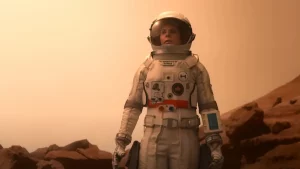
Scavengers Reign– Further proof that science fiction flourishes best in a television series format, the better to let ideas and themes grow, bend, and metamorphose in the same manner as the flora and fauna on the planet Vesta Minor, where survivors of the calamitous wreck of the cargo ship Demeter 227 are scattered and struggling to cope with the planet’s astounding and hazardous ecosystem. Horror and wonder are weaved into Joseph Bennett and Charles Huettner IV’s conception with as much fascinating dexterity as the characters’ complications which are themselves transformed by the intractable natural elements coming at them from all sides. Even Levi, the dutiful and empathetic AI, is as susceptible to transformation through Vesta’s organic matter as the humans. Whether the changes are good or bad are difficult to gauge; in fact, “good” or “bad” turn out to have as little use in classifying the survivors as the wildlife. The gorgeous animation, owing as much to the comic strips of Jean “Moebius” Girard as to the films of Studio Ghibli, keeps you alert to illumination and revulsion. Because of the relentless progression of new exotica at every narrative corner, you shouldn’t be surprised if, upon encountering the first of this series’ 12 installments, you find yourself compelled to stay with it all the way through. Nor should you be surprised if, after you’re done, you have a whole new reverence for Earth’s increasingly vulnerable ecosystem, which, as with Vesta Minor’s, should be properly regarded as a single living entity worth engaging at eye level.
Apple TV – I still believe Last Week Tonight with John Oliver is the See It Now of the 21st century (and if you don’t know what I mean by that exalted comparison, let’s go to the kinescope one more time). But occasionally, the host will get a little Too Extra for his, or his show’s own good. Recently, Oliver declared that Apple TV carries shows nobody wants to watch, hammering home the point by saying the streaming network is where celebrities go to hide. I get it, on some level. They canned Jon Stewart, and it’s understandable that Oliver would take the spiked baseball bat out of the glass case to vent his displeasure on behalf of the mensch who made him the force for good he is today. But were I he (sic), I’d think more than twice about that “nobody wants to watch” slur. As I write this, I am happily engrossed in both season three of Slow Horses and season four of For All Mankind and have gone through several digital hoops when away from home to make sure I don’t miss a single installment. Also, I’ve found myself keeping up with series that, however unpromising they seemed at first, got their hooks into me even with their quirks and shortcomings jutting out at odd places. I’m thinking principally of Ted Lasso, which overcame some glitches at the start of its third and final season to bring everybody home literally, figuratively, and, in general, smoothly. And despite what Oliver alleges about the network keeping its talent buried, it was the surprising strength of some big-name performers that carried me through their respective shows. Harrison Ford’s droll, affably wooly presence on Shrinking compensated for much of that series’ overreaching New Age-y kitsch and once Brie Larson’s character shook away the icy veneer on Lessons in Chemistry, her magnetism and charm held the show together. The network even carries what may well be my all-time favorite hate-watch series in The Morning Show, exactly none of whose characters make me want to let them into my foyer, much less my living room. And yet Billy Crudup, as the network president, is having such an insanely good time playing the leering, unapologetically two-faced butthole that every time he exits a scene I feel like applauding. Granted, it’s not Paramount/Showtime, FX or HBO Max — but then again, HBO Max doesn’t feel much like HBO used to be, as even John Oliver might agree.
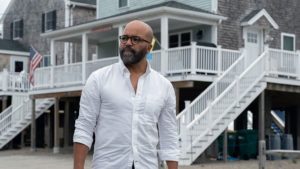
Jeffrey Wright – Thelonious Ellison, the character Wright plays in American Fiction, bears the first and last names of artists who, among their many achievements, gave permission to subsequent generations of artists to be as crazy and individualistic as they need to be. Such empowerment isn’t enough for “Monk” Ellison whose complex, resolutely philosophic novels confuse so many people that booksellers put them in the African American section only because he’s Black. But not Black enough until…well, you can read about it here. The point to be made here is that Wright’s whole career has been made up of characters you don’t expect him to play, whether it’s Felix Leiter in the Daniel Craig Bond movies or the odd amalgam of A.J. Liebling and James Baldwin he portrays in Wes Anderson’s The French Dispatch (2021) or the enigmatic man-machine doppelganger Arnold Weber/Bernard Lowe on HBO’s Westworld. Wright’s ability to contain giant waves of emotional complexity has expanded possibilities in almost the same manner as Thelonious Ellison’s two namesakes. As with all great actors, Wright’s brilliance shines even in the tightest, narrowest corners, notably in his portrayal of the flamboyant Adam Clayton Powell Jr. in Rustin where the legendary Harlem congressman’s cruel mischief oozes like spilled honey on an expensive carpet. It’s one of those mesmerizing cameos you wish you could pull away from the rest of the movie to expand into a full-length feature all its own. But why stop with Adam Powell? If we’re all serious about widening the stage and screen for color-blind casting, why not place Wright in the role of that great American exemplar of conflicting motives Richard Milhous Nixon? Is it possible that Wright’s Nixon could go deep and broad enough to cut such accomplished renderings as those of Lane Smith, Frank Langella, Dan Hedaya, or even Wright’s old Westworld boss Anthony Hopkins? I wouldn’t bet against him.
Comments Off on Gene Seymour’s Favorite Things in 2023
The 2023 Oscar ceremonies bear down on us all like a vacant, runaway bus on an oil-slicked interstate. And yet, people still can’t stop nattering about what happened at the 2022 ceremonies, when somebody’s husband got so mad at somebody else’s bad joke at her expense that he bitch-slapped that somebody else while ABC did its gosh-darndest to keep us from seeing it happen. Now the Motion Picture Academy of Arts & Sciences have assembled a “crisis team” to make sure it doesn’t happen again. Too bad. They could use the ratings. And they know it.
For yet another year, the Academy Awards stagger into view beneath a fog of uncertainty as to whether they should continue to exist at all. In a recent interview, erstwhile Paramount Pictures honcho Barry Diller declared awards season “an antiquity”, along with the movie industry that kept them propped up for more than a century. The business model, Diller says, of a movie “going to a theater, building up some word of mouth if it was successful, having that word of mouth carry itself over” has been overpowered by streams, clouds, and movie theaters closing in America and abroad as a reverberating byproduct of the COVID-19 lockdown. The very definition of a “movie,” he adds, “is in such transition that it doesn’t mean anything anymore.”
He’s right, of course. And yet, here we are again, rewiring this tired old circuitry to get audiences in the mood for another night of triumph, tears, suspense, and whatever else Oscar hype used to promise. What’s kind of ironic, if not all that significant, is that this year, there may be real suspense in a few of the major categories given the mixed results along the way in the awards leading up to March 12. As of this writing, all the trade publications and prognosticators are certain Everything Everywhere All at Once will win everything, everywhere, etc. As you’ll note below, I’m not as convinced, at least not for Best Picture.
I’m also not convinced that this will be the last Academy Awards broadcast, nor, for that matter, the next one, or the one after that. Because, as wobbly as things are with the Oscars, and as more people, even movie lovers, wish they would go away already, no one seems to have any ideas as to what, if anything, would fill the void they would leave behind. As with newspapers, all-star games, and other institutions struggling for new identities in the still-new century, the very nature of what a “movie” is and what the criteria is for assessing its value, artistically or commercially is, unavoidably, under review in several quarters. Whatever the case, the movie business as we once knew it may be dying, but movies are not; any more than opera, live theater, even the damn novel, all of which persist, despite no longer occupying the center of the zeitgeist.
In fact, what is a zeitgeist these days anyhow? If the Oscars are little more than a lame excuse to avoid dealing with that question, then, they’re good for something after all.
As always, projected winners are listed in bold with FWIW (For Whatever Its Worth) notes added whenever I feel like it.
Best Picture
All Quiet on the Western Front Avatar: The Way of Water The Banshees of Inesherin Elvis Everything Everywhere All at Once The Fabelmans Tár Top Gun: Maverick Triangle of Sadness Women Talking
Let’s get this party started by clambering out on a limb. As I’m writing this, the Screen Actors Guild, the Producers Guild of America, and the Directors Guild of America have all given their top honors to Everything Everywhere All at Once with BAFTA dissenting by making All Quiet on the Western Front its choice for Best Picture. That digression, though hardly major, should be a hint that this season’s predictions shouldn’t be, if not set in stone, certainly written in ink. As the New York Times’s Kyle Buchannan tweeted, not since Apollo 13 swept the PGA, DGA, and SAG’s top prizes 28 years ago has a movie winning those awards fell short of winning the Best Picture Oscar. On the one hand, that’s a formidable precedent; on the other, if it happened at least once before…
At the risk of repeating myself (at least to those of you who’ve been paying attention to my annual dithering on these things), the Oscars, even in their present emaciated state, are trade awards, first, foremost, and for however long they go on. In the medium’s customary tug-of-war between Art and Commerce, the latter tends to have the upper hand in the Academy’s consideration. Neither the media nor the moviegoing public are factors in the voting except for those parts of the latter group with craft union cards within the moviemaking industry. Thus, most of the Academy’s final decisions have less to do with the quality of a motion picture and more to do with assessing its overall impact on their industry’s future. Hence, I put it to you: which of these eight movies has done more to bolster whatever’s left of the movie business’s sagging confidence?
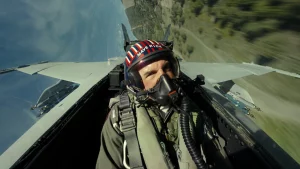
Before you answer, I need to remind you that at this year’s annual Oscars luncheon, TG:M’s co-producer and star Tom Cruise made the biggest splash among its record-breaking 182 attendees; he was the Big Man On Campus, its Belle of the Ball, with none of the baggage he’s had to lug over the past 20 years. In a year with as many wide-open categories as this, the top prize may be the widest and most open of the competitions, excepting the feature documentaries. Draw your own conclusions, but at this moment, I can easily see Captain Maverick and his squadron booming and zooming to the winner’s circle. And because the movie was better than anybody had the right to expect, it wouldn’t be the most embarrassing Best Picture award in Oscar history. Too many others compete for that dubious honor.
FWIW: I doubt Prey or Nope, two of my own favorite movies from last year, would have made this list; nor would the tightly wound and ferociously topical Emily the Criminal and the sumptuously Hitchcockian detective story from Korea Decision to Leave. What all these had in common, as far as I was concerned, was a sense of each movie going about its business, doing what needed to be done in their allotted time, and keeping their audiences alert for surprise and possibility within tight corners. In short, they were the kind of movies I sought out in theaters or drive-ins in an earlier, different life.
Best Director
Martin McDonagh, The Banshees of Inesherin Daniel Kwan, Daniel Scheinert, Everything Everywhere All at Once Steven Spielberg, The Fabelmans Todd Field, Tár Ruben Öslund, Triangle of Sadness
Fablemans is a Steven Spielberg movie about Steven Spielberg. Some people have a problem with this, and I don’t know why. It’s not getting skunked the same way that his remake of West Side Story did a couple years ago. But you’d think a love letter to movies and moviemaking would be a slam dunk with voters. Instead, Team Daniel has been riding in triumph throughout awards season and there’s not so much as a pebble to trip them up to the winner’s circle.
Best Actor
Austin Butler, Elvis Colin Farrell, The Banshees of Inisherin Brendan Fraser, The Whale Paul Mescal, Aftersun Bill Nighy, Living
At the start, this category appeared to belong to Farrell or Fraser, whose SAG win may have put him back in play. But maybe it’s kind of a retroactive referendum on what people admired more about Robert De Niro’s Oscar-winning portrayal of Jake La Motta in 1980’s Raging Bull. Was it the all-out depiction in La Motta’s volatile personality or was it the fact that De Niro invested so deeply into the role that he made himself gain weight? Guess we’ll see.
Best Actress
Cate Blanchett, Tár Ana de Armas, Blonde Andrea Riseborough, To Leslie Michelle Williams, The Fabelmans Michelle Yeoh, Everything Everywhere All at Once
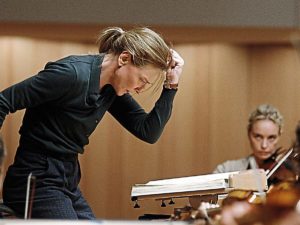
Everybody I know, including me, is rooting for Yeoh, though Blanchett’s been mounting a doughty and, it would appear, successful campaign to dispel the negative vibes her movie stirred up in the classical music community. Cate’s BAFTA win teases us into thinking this will be a photo finish, but somehow, I doubt it’ll be that close
FWIW: Every year, the Oscars always seem to single out a “little” movie with a broken, put-upon protagonist struggling with some malady that s/he cannot control until they find redemption at the end. This year, that movie is To Leslie and its principal beneficiary is Andrea Riseborough, whose controversial nomination came through an eleventh-hour campaign with big names (Kate Winslet, Amy Adams, and Gwyneth Paltrow among them) pushing her over. This in turn led to cries of foul, especially among the #OscarSoWhite veterans believing Risborough’s candidacy came at the expense of such Oscar-worthy lead performances as those of Danielle Deadwyler (Till) and Viola Davis (The Woman King), both of whom were nominated for SAG Awards, but lost to Yeoh. Till’s director Chinonye Chukwu accused Hollywood of “unabashed misogyny towards Black women.” She’s not altogether wrong. But it doesn’t mean Riseborough’s nomination is a manifestation of this prejudice. It’s legit. You come away from To Leslie with Riseborough’s all-out investment in her serial-fuck-up character resonating in your head. Do I think she’s better than Blanchett or Yeoh? Apples and oranges. Do I think Deadwyler was better in her movie than Riseborough was in hers? I’d say it’s a draw. Do I think Davis was better in Woman King? You bet I do because, as I’ve stated before on this platform, Viola Davis is God! Then again, I also would have wanted Aubrey Plaza represented here for Emily the Criminal. But who cares what I want? Not Hollywood. That, as we were once fond of saying, is show biz and biz-ness of any kind rarely plays fair. So, I say kudos to the coalition behind Riseborough for making their push. Someday soon, Black and Brown people will make their own Riseborough uprising because of the precedent it set. To repeat: that’s show biz.
Best Supporting Actor
Brendan Gleeson, The Banshees of Inisherin Brian Tyree Henry, Causeway Judd Hirsch, The Fabelmans Barry Keoghan, The Banshees of Inisherin Ke Huy Quan, Everything Everywhere All at Once
By now, a foregone conclusion. And, as with last year’s winner in this category, it’s also a great story: the little boy émigré from Vietnam who played Short Round in 1984’s Indiana Jones and the Temple of Down hitting the jackpot forty years later. Fun fact: Jeff Cohen, who played Chunk to his Data in 1985’s The Goonies, is now his lawyer.
FWIW: Keoghan was a surprise BAFTA winner in this category, and it may be because his poignant presence shined through the outsized personalities of Banshees’ two stars. He’ll get some attention, but, in many ways, he’s already won. As for Paper Boi (Henry), his day’s coming. Count on it.
Best Supporting Actress
Angela Bassett, Black Panther: Wakanda Forever Hong Chau, The Whale Kerry Condon, The Banshees of Ineisherin Jamie Lee Curtis, Everything Everywhere All at Once Stephanie Hsu, Everything Everywhere All at Once
Curtis’s SAG award shouldn’t have come as a surprise. For starters, she’s totally unrecognizable in the movie, at least at first. And Oscar loves it when the glamorous go all out to distort themselves on camera, especially when, in Curtis’s case, they’re Hollywood royalty. I’m now feeling it’s hers to lose. Bassett’s infusion of power and vulnerability helps ground what could have been an unwieldy popcorn blockbuster and made her an early favorite. But the MCU can’t withstand the accumulated might of ancestral movie legacy. Not this time, anyway.
Best Adapted Screenplay
All Quiet on the Western Front Glass Onion: A Knives Out Mystery Living Top Gun: Maverick Women Talking
On the one hand, giving an Oscar to a Nobel Prize winner like Kazuo Ishiguro (Living) would show elevated thinking on Hollywood’s part. On the other, Sarah Polley has quietly, diligently proven herself to be one of the world’s best writer-directors and I can’t see her walking away empty-handed from another one of these ceremonies.
Best Original Screenplay
The Banshees of Inisherin Everything, Everywhere All at Once The Fabelmans Tár Triangle of Sadness
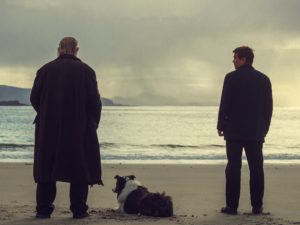
Anything with Martin McDonagh’s name on it is all but automatically placed in this category’s pole position. This one’s an odd chamber piece, an astringent, overextended Laurel and Hardy sketch in which you actually feel the bumps on the noggin and see all the bruises, physical and otherwise. However thin the gruel, I can easily see it winning, though there’s always a chance that the momentum of EEAAO (“…with a moo-moo here and a moo-moo there…”) could sweep this one up.
Best International Feature
All Quiet on the Western Front Argentina 1985 Close EO The Quiet Girl
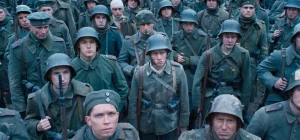
Given a Best Picture BAFTA and eight other nominations, Edward Berger’s graphic, devastating take on Erich Maria Remarque’s novel is the surest bet on the table.
Best Animated Feature
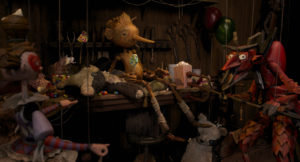
Guillermo del Toro’s Pinocchio Marcel the Shell with Shoes On Puss in Boots: The Last Wish The Sea Beast Turning Red
I feel relatively alone in asserting that this spikier, darker take on The Puppet Who Wanted to Be a Real Boy may have been a more imaginative and adventurous movie than any of the Best Picture nominees if only in the way it risked pissing people off who cling to their memories of the Disney version, which, for the record, I love, too. Most of the experts think it’s a lock, but I’m sensing a groundswell of support for M. Shell.
Best Cinematography
All Quiet on the Western Front Bardo: False Chronicle of a Handful of Truths Elvis Empire of Light Tár
Another close race, this one primarily between James Friend’s work on All Quiet on the Western Front and Mandy Walker’s on Elvis. If Walker wins, she will be the first woman to do so. But Friend’s movie also is nominated for visual effects and production design, which experts say gives him the edge. Screw it. I’m going to put my chips on progress.
Best Documentary Feature
All That Breathes Fire of Love All the Beauty and the Bloodshed A House Made of Splinters Navalny
By far, the widest-open race this year. If precedent alone was a factor, Sara Dosa’s DGA prizewinner, Fire of Love, with its dual themes of nature and everlasting love (married scientists who perish in a volcanic explosion), would have the edge. Then again, voters’ hearts would be just as vulnerable to House Made of Splinters which is set in a home for neglected children awaiting adoption. But the timeliest of these nominees is Daniel Roher’s tense profile of the Russian opposition leader who survived poisoning by Vladimir Putin’s goons, recovered in Germany, and returned home to a hero’s welcome – and imprisonment. The winner may, as in previous cases, depend on whether voters want to assault the turmoil of what’s been happening in Russia and the Ukraine, or run from it towards more hopeful, or at least more heartening stories. I’ll guess I’ll just what-the-hell my chips on Roher’s film.
Best Score
All Quiet on the Western Front Babylon The Banshees of Inisherin Everything Everywhere All at Once The Fabelmans
Once more, with feeling, to 91-year-old John Williams, though Carter Burwell still hasn’t won one of these yet. Here as elsewhere, I’m not convinced Banshees is strong enough to pull him over the hump.
Best Original Song
“Applause” from Tell It Like a Woman “Hold My Hand” from Top Gun: Maverick “Lift Me Up” from Black Panther: Wakanda Forever “Naatu Naatu” from RRR “This is a Life” from Everything Everywhere All at Once
With Rhianna (“Lift Me Up”), Lady Gaga (“Hold My Hand”), and one third of David Byrne (“This is a Life”) in play, how is it possible that the showstopper in this bunch belongs to a Tollywood epic that somehow stormed the global marketplace? Everybody seems to have already taken its win for granted, but everybody, including me, has been wrong many times before on this category.
Comments Off on Seymour Movies Struggles to Stay Intrigued by 2023 Oscars
There’s so much stuff to keep track of these days that it’s easy to lose track of stuff that seemed so great to watch, read, or even glean. So, this took a longer time to assemble than previous lists because it took that long a time to process the maelstrom that was 2022. I’m not going to tell you what I think is missing here because you’ll all have your own lists, some of which will likely include, say, the January 6th hearings or Everything Everywhere All at Once. The Multiverse itself likely deserves a slot all its own, except how do I know I don’t have a whole other list somewhere that’s all different. But there’s no time left to figure all that out. This is what I’m going with, and, except for the very last item, I feel altogether good about it. As always, these are not in any particular order – except, again, for the last one.
Reservation Dogs – Two things, I’ve recently decided, make life worth living: a sense of purpose and an active connection with each other’s souls, no matter how remote or hostile. Such were the animating forces of Sterlin Harjo and Taika Waititi’s poignant blend of teen anomie, vacant-lot naturalism, and stoner surrealism. As with its predecessor, Season Two found its indigenous American kids adrift in their ramshackle Oklahoma hood, still grieving the suicide of their friend Daniel and still getting haphazard and not altogether lucid counsel from varied elders, living and dead. My personal favorites among the latter demographic include, among the dead, William “Spirit” Knifeman (Dallas Goldtooth), a Lakota ancestor to confused-and-abandoned Bear (D’Pharoah Woon-A-Tai), whose half-baked advice to his teen descendant include lyrics from “Carry On Now Wayward Son” (yes, that one); among the living, it’s a three-way tie between Officer Big (Zahn McClarnon), a tribal policeman who stumbles his way towards a wholly innate sense of law, order, and even (such as it is) justice; woozy, weed-mongering Uncle Brownie (Gary Farmer), and the oracular-if-shabby Bucky (the great Wes Studi), with his hard-won cosmic wisdom. Still, it’s the kids who occupy the series’ fitful center; not just Bear, but also Cheese (Lane Factor), Willie Jack (Paulina Alexis), and Elora (Devery Jacobs), whose single-minded path towards California anchored the second-season narrative, and now appears ready to affect her friends’ destinies. Whatever happens and wherever all the rest of the grownups and kids end up, I hope I see more of those rapping, bike-riding bros LilMike and FunnyBone. Even if I don’t, I’ll happily settle for more Bucky and Brownie.
The Philosophy of Modern Song — Don’t call it “Bob Dylan’s Pop-Rock Criticism” or apply any socio-political ideology to its 60-plus selections. More than anything else, this is the authentic follow-up to Dylan’s 2004 memoir, Chronicles, Volume One and should be acknowledged as the autobiography of a personal aesthetic. Its illustrations and its text are as illuminating, evocative, cryptic, funny, and exploratory as “Bob Dylan’s 115th Dream,” “From a Buick 6,” “Positively 4th Street,” or any other Dylan song, even those with no numerals in them. Also as with a Dylan song, whatever its intentions or origins, much of the raw content of these mini-essays, addenda, outbursts, and eruptions may arouse your subconscious to something it never considered before but recognizes as familiar. And no, I’m not going to explain what I mean by that. (At least not here. Later on, I do. Sorta.)
Star Trek: Lower Decks – I’ll always place Matt Groening’s ribald space opera Futurama first above equals among animated science fiction TV series, even above the underappreciated, trailblazing, and scarily prescient Jetsons, which marked its 60th anniversary this year. Nevertheless, after three seasons, this doughty, wily offshoot of the ever-expanding-like-the-universe-itself Trek franchise has not only leaped towards the front of this personal pantheon, but it also threatens to become my favorite among the Trek shows that streamed into being over the last five years. As its title implies, the show moves its focus away from the Alpha Dogs of Star Fleet like Kirk, Spock, Sulu, Picard, Riker, La Forge, and other Heroes on the Enterprise Bridge and more towards the scrubs, swabs, and junior grade drudges several floors down from whose ranks would routinely come cannon fodder with imperiled landing parties in previous Trek incarnations. The series’ core clique waiting and serving on the USS Cerritos (itself a relative second-stringer among Star Fleet ships) is made up of science nerd D’Vana Tendi (Noêl Wells), super-striving Brad Boimler (Jack Quaid), sweet-tempered cyborg Sam Rutherford (Eugene Cordero), and last-and-certainly-not-least Beckett Mariner (Tawny Newsome), thorny, determinedly underachieving daughter of the ship’s captain Carol Freeman (Dawnn Lewis), whose own insecurities and thwarted ambitions are of such comparable dimension that you come away from this ingenious, often touching series affirmed that even in deep space, nobody ever gets out of high school, dead or alive.
Percival Everett – Suppose Chester Himes was an actual cowboy who spent as much time working out ontological riddles as riding ranges and fishing in mountain lakes. At age 65, Everett, who claims Himes as an influence, along with Herman Melville, has published more than twenty works of fiction of startling range, deadpan humor, and formidable intelligence. This year, for instance, he published Dr. No, where he borrows both a title and a plotline from Ian Fleming’s James Bond’s novels to fashion a blackout-adventure spoof judiciously seasoned with red herrings and philosophical conundrums. If I told you it’s about Nothing, you’d still read it, right? You’d have to read it. But if I were you, I wouldn’t start with the new one, but the one just before that was short-listed for the Booker Prize: The Trees, a very different, but no less provocative and inspired comedy thriller in which cool, dry Black agents from, the Mississippi Bureau of Investigation (MBI) investigate the serial murders of white racists whose bodies are somehow accompanied by the corpses of long-dead lynching victims, including Emmett Till. It made you almost wish Hollywood had made this into a movie instead of Till. But Hollywood was barely ready for that straight-ahead story to be told on-screen. And I doubt it’ll ever be ready for Percival Everett. But you might be. (Other recommended titles: Glyph, Erasure, I Am Not Sidney Poitier, For Her Dark Skin, Damned If I Do.)
Nope – Though I honor the memory of Rod Serling and what he did for me as a child in the warm bath of his Twilight Zone, the grownup I am now is less drawn to those Serling-esque episodes making broad and direct sociopolitical points and more towards those Zone stories written by Richard Matheson and Charles Beaumont that were more interested in pure jolts and unsettling visions for their own sake. Maybe that’s why I think this third feature by Jordan Peele is his best thus far for the same reasons much of the word-of-mouth I’d heard when it came out was so antagonistic: it was all over the map, in both theme and tone; it didn’t sustain a straight storyline or deliver a hard, sharp point. And it left me with more to unravel and think/dream about than either Get Out or Us. Yes, there’s a racial subtext (what Hollywood did for, and mostly to its Black workers, on- and off-camera), but it’s only one of several layers in this aliens-from-outer-space movie that manages to evoke the dry-mouth aura of a 1950s drive-in chiller while being up to date with its eccentric supporting cast, especially the marvelous Keke Palmer as steely, feisty sister to Daniel Kaluuya’s dispirited horse trainer. For the record, Michael Abels’s score reaches new heights here, too. Almost as high, maybe higher, than the big black disc in the sky that causes all the trouble.
Abbott Elementary – As I’ve previously testified in public, I was so much in love at first sight with Quinta Brunson’s tender and whimsical workplace comedy series about an economically challenged South Philly public school that I took its premature cancellation as an inevitability. Now it’s a firmly established hit which may well be single-handedly rescuing the analog network sitcom from oblivion. Somewhere, Mister Peepers is grinning – and idly wondering how he’d cope with a principal like Ava Coleman.
Matthew Goode in The Offer — For most of Goode’s career, I thought I had him nailed down as a pleasant, perfectly comported prototype of the British smoothie capable of an eccentric tic (in the manner of British smoothies) or even a swerve into hysteria because of, say, combat fatigue from whatever beastly war harshed his erstwhile empire’s mellow. Watching him bring Robert Evans back to life in The Offer was a massive revelation. Those who know or have seen the 2002 documentary The Kid Stays in the Picture don’t need to be told that Evans was something of a Hollywood superhero in the mid-1970s when the movie business was generally lost at sea while the art form was at its peak. Evans’ one major misfire of that decade was The Great Gatsby and what you see in Goode’s evocation discloses where he went wrong: to do Gatsby right, what Evans really needed to do was to let cameras follow him around for a year and have somebody edit all the raw footage into a feature. That hypothetical verité could have been just as innovative and grand an achievement as both Godfathers and Chinatown. As it was, Goode’s rendering of a Gatsby-esque Hollywood legend, a “Last Tycoon,” if you will, elevated an otherwise middling docudrama to near-classic tragedy.
Prey – This was the prequel to the Predator franchise than no one, not even those who don’t care about hunter-gatherers from outer space, knew they wanted until it materialized in front of them. Set in a primeval American Great Plains more than three centuries before Arnold Schwarzenegger was a gleam in his mother’s eye, the film stars the magnetic Amber Midthunder as Nuru, an indigenous young warrior itching to show her brother and the other young tribesmen that she’s as great at stalking and hunting as they are. But the first in a series of hairy, insect-faced extraterrestrial hunters begins to pick off the incredulous young braves, eventually leaving her to figure out how to protect the rest of her village from being harvested. The special effects are, in their elemental way, just as spectacular as the hi-tech pyrotechnics of previous installments. (You will believe a bear can fly.) But Midthunder is, on many levels, the most dazzling of the movie’s assets, her character’s intensity and self-possession announcing both a young woman’s coming-of-age and a screen star’s arrival.
Atlanta: The Final Season(s) – Where to begin? The crew’s WTAF adventures during Paper Boi’s (Bryan Tyree Henry) European tour, including strange encounters with, among others, a friendly-but-oddly-abusive Liam Neeson, some well-heeled gourmet cannibals, a Blackface Dutch Christmas icon, along with streams of misread signals, overpriced fashion goods, exotic and dangerous drugs, and a missing phone. Or what about the seemingly “free-standing” stories, including the one about the wealthy white Manhattanites who discover their little boy is emotionally and psychically closer to their recently deceased Caribbean caregiver? Things got even weirder when Earn (creator-producer Donald Glover) and his posse returned to Atlanta where things are as dislocated as ever; how Van (Zazie Beets) somehow ends up searching for her daughter within a sinister cult-like entertainment complex run by the exploitative, enigmatic Mister Chocolate (Glover), all of it finishing off somehow with harrowing adventures in sensory deprivation with perpetually stoned Darius (Lakeith Stanfield). And that just scrapes the surface of this layers-within-layers, worlds-within-worlds cultural excursion that resembled exactly nothing else anywhere on any screen. They say it’s over. Not in my head, it isn’t.
Top Gun: Maverick – This is on the list primarily for its significance as a cultural phenomenon and not so much because it’s a great, or even very good movie. Not that I didn’t like it. In fact, I liked it a whole lot more than its 1986 predecessor, when its star’s grin was devouring everything in its path, symbolizing both the era’s avarice and obliviousness. TG:M provided such a massive, exhilarating surge to theaters struggling to shake loose from the COVID-19 doldrums that some audiences used the word “great” without qualification or irony. There were great things in it, most having to do with aerial ballet. But as all-American paeans to duty go, I much prefer John Ford’s calvary trilogy (Fort Apache, She Wore a Yellow Ribbon, Rio Grande) and even with Ed Harris around for the first act, I’d still rather watch The Right Stuff than either Top Gun movie.
In that first act (and if I’m really spoiling things for you here, then, dammit, go watch it on a streaming channel), Tom Cruise’s Maverick flies a state-of-the-art craft based on the now-decommissioned SR-71 “Black Bird” modified to reach Mach 10. Harris’s crusty admiral is about to shut down the manned flight experiment in place of drones, which kinda sorta makes sense. But “Mav” being “Mav”, he takes the plane up into the stratosphere and not only reaches the optimum speed but decides to stretch that old envelope a tad past Mach 10, which causes the plane to break up in flight. The next thing you see is Maverick, woozily lugging his parachute into a small-town diner, chugging ice water and asking where he is to which a small boy replies, “Earth.”
Now I don’t claim to be an aeronautical engineer. But I’ve absorbed enough histories of test flight and space travel to know that any corporeal being who even tries to eject from a flying object traveling past Mach 5 (a.k.a. hypersonic speed) will at the very least break every single bone and rend almost every tissue in its body, even in the highly unlikely event that a parachute opens. I’ve heard explanations (a.k.a. excuses) that the plane was likely equipped with some manner of “escape pod” that broke away and carried its pilot safely to the ground.
It’s only a movie, right? And a movie that works so conscientiously to please its audience as Top Gun: Maverick needs to sacrifice credulity to roll the turnstiles and leave everybody happy.
But suppose, just suppose, that what we see when that plane breaks up high in the sky is the death of Captain Pete Mitchell, USN? And what if everything we see afterwards, including – and especially – Maverick’s reunions with his ailing wingman and the embittered son of the Lost Goose, make up an extended posthumous dream sequence, a Sixth Sense with G suits and F-35s? You’d have a less satisfying popcorn epic. You might also have a resonant masterwork of American storytelling. As it stands now, it’s likely the loudest, most ornately apportioned shout of “olly-olly-oxen-free” ever issued to the moviegoing public. Thus, it’s a masterstroke of some kind. But not quite the one we, or the movies, really needed.
Comments Off on Gene Seymour’s Top Ten 2022 List of Everything Else
Reposting this essay I wrote twelve years ago about Vincente Minnelli’s 1943 classic all-Black musical because a.) people besides me like it a whole lot and b.) because of its more-timely-than-ever admonitions against too-easy dismissals of what is believed to be Anachronistic and (thus) Patronizing. Also if you’ve never seen it before and it happens to come your way again, jump on it. You won’t be sorry.
At the hinge of the 1960s and 1970s, Cabin in the Sky embodied everything we young, gifted, and solemn black college students thought we were fighting against. All we blinkered baby cultural-nationalists could see back then in those idyllic depictions of small-town African American folk life were unhealthy levels of honeysuckle and hambone. Eighty-six those rolling dice and eyeballs, all that cornball piety and undignified shucking! Is that really what we wanted our collective profile to look like after King and Malcolm and countless others had died for our advancement?
It’s a measure of how much time has passed that I can’t even LOOK at that previous sentence, much less write it, without wincing; the same kind of wincing we aforementioned Children of the Movement were doing whenever Cabin poked out from TV’s wee-hour wilds or was screened at collegiate film societies. Exaggerated nose-turning-in-a-vertical-direction is at least as embarrassing as pronounced eye-rolling – and not nearly as funny. Given the choice between retroactive scoldings from what some new-jack pundits have come to label the “soul patrol” and the to-be-or-not-to-be anxieties displayed by Eddie “Rochester” Anderson, I know whose party I’d rather go to.
The distinction no longer needs raising. A few days ago, I’d hosted a screening of Cabin for a Wednesday-night Lenten supper at our predominantly black Episcopal church in lower Manhattan. It was a small audience, mostly older and just about all of its members had seen the movie before and loved it without predisposition or qualifiers (even though the DVD released three years ago opens with Warner Home Video’s contemporary disclaimer apologizing about “stereotypes” that were “wrong then and wrong now.”) The tiny audience appeared to appreciate the concern, though it didn’t need to be told what was or wasn’t appropriate. They just wanted a warm black-and-white memory bath. Even the sole 20-something in the room, recruited to help with projection, was caught up in a movie old enough to be his (grand) mother.
Each time I see the movie, I’m more galvanized by the sheer magnetism of its performers. Even in the reproachful seventies, it was hard not to be waylaid by the glory that was Lena Horne in her twenties. What she was then and what she remained throughout the sixties and beyond was so legitimate & enduring to young black fogies like us that we gave her quick dispensation for Cabin; the kind of pass that that didn’t easily go to, say, Ethel Waters (about whom, more later),“Rochester” Anderson or John “Bubbles” Sublett, whose song-and-dance recital of “Shine” is at once the movie’s most glaring anachronism and its most flamboyant affirmation of poise and skill.
Which in no way slights everyone else in the movie, though you wish Louis Armstrong got to do even a little bit more than set off a few elegant licks while wearing those ridiculous devil’s horns. You also wish you could see more of Duke Ellington’s orchestra at work beyond flashes of its suave, imperturbable leader. (That IS Johnny Hodges in the front with the alto, right?) But first-time director Vincente Minnelli was too caught up in the dancing and singing – and rightfully so. His own eye is so greedy and avid for movement and energy that you can almost feel him sitting next to you as you’re looking for the next big moment.
Almost all of which moments are owned by Waters. Donald Bogle has elsewhere noted how often contemporary audiences are drawn to screenings of Cabin by the promise of seeing the young, cat-like Horne, yet leave those screenings dazzled by Waters’ charisma. If younger moviegoers had easy access to Waters’ recordings from the 1920s and 1930s, they’d be better prepared for her vocal agility. (Critics and historians, not that anyone pays them any mind, argue with conviction that Waters’ chops as a singer were the equal of Armstrong’s – and that her influence on jazz singing was just as emphatic & far-reaching.)
But hardly anyone at any age is prepared for the moment when Waters’ Petunia, backsliding into “sin” to “save” Anderson’s Joe from the Devil’s clutches, sashays into a startlingly graceful jitterbug with Sublett’s Domino. One has read in books about both women of tension between Horne and Waters throughout Cabin’s shooting. (In her own memoir, His Eye is On the Sparrow, Waters doesn’t go into detail about the friction except to say that she “won every battle” and that her scrapes kept her away from the movies for another six years.) Whether Waters ended up dominating Cabin by fair or foul means, her triumph endures just as Dilsey, the character she played in her last film, 1959’s The Sound and the Fury, endured.
After the church screening was over, I asked the audience if there were still aspects of the movie that offended or seemed out-of-date. No one could think of any – and I honestly couldn’t come up with any that mattered. I do wish, in retrospect, that I’d asked them if it seemed as though the folks who were either in hell or engaging in “sinful” partying had a better time – and heard better music – than those who stayed close to Petunia’s righteous path. I decided against bringing that dilemma up in a Lenten discussion, though it now strikes me that there were folks willing to talk it over.
I did, however, bring up the closest present-day corollary to Cabin in the Sky’s blend of low comedy and Manichean melodrama: the films of Tyler Perry, especially those featuring Madea, Perry’s pious, pistol-packing alter-ego. Since I knew that all those assembled had seen more than one Perry movie more than once, I asked if there was any real difference between the depictions of black life in Cabin and those in, say, the recently released Madea Goes to Jail. They said there were none; a surprise to me since I expected them to mention the relative rawness of Perry’s depictions of single motherhood, class animus and teen pregnancy. Cabin’s dichotomy between Petunia’s milk-and-honey world view and the temptations of the flesh embodied by Horne’s duplicitous Georgia Brown seem like old school Disney by comparison. But in both cases, a simplistic (as opposed to simple) solution to mortal weakness and moral sloth is submitted to audiences for whom broad laughs and big emotions are the only justifications for entertainment.
Perry continues to astound the mainstream (white) world with the bushels of money he reaps for his movies. And his entrepreneurial moxie serves as a reminder that, unlike the 1940s (or the two decades subsequent to or preceding them), it’s possible for African American artists to have some control over how they’re depicted on screen, for better or worse. I still wonder whether future generations of black people will someday accuse his work of, at best, being too over-the-top or (so to speak) too black-and-white in their moralistic aims. I doubt it somehow. But of one thing I have no doubt: Madea, whatever her own martial skills or swaggering mojo, is no Ethel Waters.
Comments Off on Seymour Movies Retrospective: Watching “Cabin in the Sky” for Lent (2009)
I’ve never believed there was a useful distinction to be made between “popcorn movies” and whatever’s meant by “prestige films.” Good movies are good movies and whatever’s left to talk about is marketing, nothing more.
And so, for that matter, is all this year’s pre-Oscar chatter about the decline in TV ratings for the awards ceremonies and the relative apathy among the public for movies considered “Oscar bait.” Do pundits and other assorted “observers” really think nominating Spider-Man: No Way Home for Best Picture is going to revive the Academy Awards’ profile among the masses? I don’t think so – and I happen to believe movies like Spider-Man should be nominated – as long as they’re good; just as I was pulling for Deadpool’s nomination (and for that matter, Leslie Uggams’) a few years back and wouldn’t have at all minded if Black Panther had won Best Picture over Green Book three years ago. It was, after all, the better movie in addition to being the bigger success.
Neither factor has ever really mattered when it comes to the Academy Awards. As I keep putting my blood pressure at risk to tell people who refuse to believe otherwise, the Oscars are trade awards voted and decided upon solely by those who work in the film industry. That means whatever gets nominated and rewarded depends on whatever mood prevails each year among a crowd of Hollywood working stiffs. And these mood swings are somehow immortalized (for at least three months or so) as the Best Movies of their particular year by cable news channels, slick magazines, and whatever’s left of the newspaper industry.
The social and economic upheavals of the last three years, especially the pandemic’s ongoing reverberations, are causing even legacy media institutions to wonder if this venerable charade is, at last, over and out. The celebration of the 50th anniversary of The Godfather’s release is a melancholy reminder of theatrical cinema’s once prominent place in American life and of how the old apparatus of making and hyping movies at all levels of society hasn’t existed since at least the second Clinton administration. Once again, I find myself asking, if we’re no longer sure what a movie is, then what the hell is an Oscar? And more to the point, what’s any of it worth?
I still don’t have an answer and I bet none of you do either. It’s one of those many 21st-century dilemmas for which an answer will surface on its own rather than materialize as a lightbulb over the head of an Instagram follower. For now, The Show in whatever form and however it’s packaged will go on as will the usual griping and grousing from those who don’t care and never have about Academy Awards. I’m no longer sure I care much either. But I’m here. Again. And many of you are or will be. I can hear you growling and snapping.
Once again, projected winners are in bold and, whenever applicable or appropriate, an FWIW(For Whatever It’s Worth) note will be added to each category.
Best Picture
Belfast CODA Don’t Look Back Drive My Car Dune King Richard Licorice Pizza Nightmare Alley The Power of the Dog West Side Story
Even before cowpoke’s cowpoke Sam Elliot blurted his indelicate critique against Power of the Dog (and these days, Oscar Season just isn’t Oscar Season without some occasion for public outrage and virtue-signaling to keep the yahoos distracted), Jane Campion’s western was showing a slight drop from the front-runner status it seemed to nail down upon its premiere last fall. The first wave of acclaim, along with the initial flurry of critics’ awards and field-leading 12 Oscar nominations, was followed by an unusually quick and acerbic blowback. I’d expected Belfast to be the principal beneficiary of this shift in Power/Dog’s fortunes – and it still might be. But lately it’s CODA that’s been gathering a head of steam since it won a best-movie-ensemble award from the Screen Awards Guild (SAG).
Not that SAG’s record as a Best Picture harbinger can be counted on to float without sinking. Less than half of the last 26 winners of that award carried their luck over to Oscar’s big prize. And besides (trying not to spoil things here), CODA’s story of a working-class teenager choosing between fulfilling her destiny as a singer and helping her financially strapped deaf family fits snugly into how SAG’s members see their own careers and aspirations. You wonder if that story arc is likely to patch into other Oscar voting blocs. Heck, yeah, it is, especially if it makes everybody cry as they’re watching. At the time I’m writing this, it’s still Power of the Dog’s race to lose, and as one of my correspondents suggests, Sam Elliot’s “POS” tirade could end up gaining added sympathy for Campion and her movie. But recent history has me regretting every time I’ve underestimated the power of “feel good” movies.
FWIW: Here’s where I usually talk about what I liked best last year, Oscar-nominated or not. Mostly I am, and plan to remain, confounded and aggrieved over Passing, its two stars Tessa Thompson and Ruth Negga, and its first-time director Rebecca Hall getting skunked out of any nominations whatsoever. In the long run, it may be all for the best; movies that are bold and enigmatic in their own time often find greater acceptance in another time – and I still believe in time. Speaking of boldness, I keep insisting that Nightmare Alley wasn’t a “remake” of a 1947 noir classic so much as a total reimagining as though 1945’s Detour (a far bleaker and grittier exemplar of “noir” movie than the original Nightmare) had a head-on collision with a Stephen King movie adaptation from the mid-to-late-1980s. It got a few Oscar bids in technical categories, but you’ll never see it win anything on live TV because of how they’re planning to telecast this year’s ceremonies. The Steven Spielberg-Tony Kushner revival of West Side Story deserved much better upon its theatrical release than it got from the public and from industry wise guys too quick or, maybe, too eager to stamp it as a disaster. These days, I’d say, the word “disaster” weighs too much to casually fling at a movie whose biggest mistake was having the bad luck to pile into movie houses during a pandemic. To me, there’s no greater portent for the inevitable fall of the multiplex than the turnaround in overall reaction to West Side Story 2.0 in the weeks since it dove into the streams, as it were. I also have a qualified recommendation for The French Dispatch that reflects the latent generosity, or greater tolerance from my older, more indulgent self towards Wes Anderson’s intricate jewelry boxes. Or maybe it’s that I’ve lately found his knee-jerk critics more insufferable as time passes for their all-too predictable carping and jeering.
Best Director
Kenneth Branagh, Belfast Ryûsuke Hamaguchi, Drive My Car Paul Thomas Anderson, Licorice Pizza Jane Campion, The Power of the Dog Steven Spielberg, West Side Story
Even if Power/Dog doesn’t get the Big One, it won’t keep its director from Getting Hers, as it were. It used to be an anomaly for Best Film and Best Director winners to diverge. It’s now happened often enough in recent years to be taken for granted. Campion still has lots of support for this one whatever Sam Elliot says. And, as I said earlier, he may even have unintentionally helped her stay in front of this pack.
FWIW: If I had a vote on this one, Spielberg would get it; if nothing else, just for withstanding all the catcalls he was getting, even as he was still trying to finish it against stiff odds. (e.g., “Why are you bothering? The first one was just fine!” Or: “Why are you bothering? This old warhorse is too creaky, an anachronism, etc.”) Branagh could also pick Campion’s pocket, but only if Belfast wins Best Picture.
Best Actor
Javier Bardem, Being the Ricardos Benedict Cumberbatch, The Power of the Dog Andrew Garfield, tick..tick…Boom! Will Smith, King Richard Denzel Washington, The Tragedy of Macbeth
As good as I am at intuiting such things, I still can’t tell for sure how much Hollywood still loves Will Smith, despite the hugs, kisses, and backslaps he got for winning the SAG prize a few weeks back for this same role. And yet I can’t imagine anybody else from this list taking the Oscar from him except possibly …Denzel, whom I’m sure Hollywood loves for still being able to open a movie on name recognition alone while always delivering nothing less than an A-level performance. His Macbeth isn’t his very best, but it’s good enough. Smith’s rendering of the Williams sisters’ volatile, complicated daddy, on the other hand, IS his very best. Not a slam dunk, maybe; Cumberbatch also lurks in the weeds. But taking everything into account, it’s close to a no-brainer.
Best Actress
Jessica Chastain, The Eyes of Tammy Faye Olivia Coleman, The Lost Daughter Penelope Cruz, Parallel Mothers Nicole Kidman, Being the Ricardos Kristen Stewart, Spencer
Chastain’s SAG award vaulted her to the foreground of a not-terribly-strong-but-highly-competitive field. It’s a big, bravura performance, exactly the type that actors love to reward. And however effective, say, Kidman and Stewart (especially) were at embedding themselves in their real-life personas, it’s now Chastain’s to lose.
Best Supporting Actor
Ciarán Hinds, Belfast Troy Kotsur, CODA Jesse Plemons, The Power of the Dog J.K. Simmons, Being the Ricardos Kodi Smit-McPhee, The Power of the Dog
Another case where the SAG vote seems to have locked this one up. McPhee had the early lead, but with Plemons’ nomination for the same move came that hoary old saw about “splitting the vote,” which I never thought mattered much and won’t this time either. The veteran Hinds enjoys much affection and esteem among his peers and his turn as the grandfather in Belfast is lovely and touching. But Kotsur’s movie now has greater momentum and his is the far more compelling backstory.
FWIW: There was a moment early on when I thought Simmons had a fair shot of getting his second one of these and it had mostly to do with how even those who disliked Being the Ricardos were always happy to see his William Frawley appear on-screen.
Best Supporting Actress
Jessie Buckley, The Lost Daughter Ariana DuBose, West Side Story Judi Dench, Belfast Kirsten Dunst, The Power of the Dog Aunjanue Ellis, King Richard
Rita Moreno made me tear up when she soloed on “Somewhere” in West Side Story. I was sure that alone would have made inevitable another nomination, even another win 60 years after she copped this same award for playing Anita. Still, DuBose is getting unadulterated props – and prizes — for her fiery, effervescent, and deeply touching turn in the same role. She should have little-to-no trouble adding another trophy to the pile…
FWIW: …but if it were up to me, I’d ship this puppy posthaste to Aunjanue Ellis for all but stealing her movie out from under the Fresh Prince’s fabled jawline. Her character’s confrontation with a meddling neighbor was an aria of last-nerve enervation with Other People’s Bullshit. Love her, even if hardly any other forecaster seems to notice, or care.
Best Original Screenplay
Belfast Don’t Look Up King Richard Licorice Pizza The Worst Person in the World
Paul Thomas Anderson may be the most original and audacious living American filmmaker – which won’t necessarily help him win this one. You need to be in the mood for Licorice Pizza’s first-this-happens-then-this-happens-and-then-this-happens storytelling, which would be far more welcome to moviegoers in the 1970s when this story takes place. I was down with it because that decade was my most formative as a cineaste and it is probable there’s a majority of voters in this category who are likewise disposed. But I sense this one’s heading to Northern Ireland.
Best Adapted Screenplay
CODA Drive My Car Dune The Lost Daughter The Power of the Dog
This one’s wider open than it seems with all except, maybe, Dune carrying strong, if not overpowering cases on their behalf, and none as innovative as Kushner’s delicate, detailed upgrade of West Side Story‘s book, which was totally ignored. Even with CODA‘s late surge to the finish line, I’m thinking Power/Dog may have the edge. But not by a lot.
Best International Feature
Drive My Car Flee The Hand of God Lunana: A Yak in the Classroom The Worst Person in the World
Drive My Car’s triumphant ride through last year’s festival circuit made this elegiac dissection of grief an early favorite in this category. But this is an especially strong field, with both the groundbreaking Flee and Worst Person in the World drawing homestretch buzz. The Ukraine invasion could be a rogue factor favoring Flee if not in this category, then in one of the other two where it’s contending. Even past winner Sorrentino’s Hand of God has a puncher’s chance. Keeping my finger here for now but prepared to move it at any time.
Best Documentary Feature
Ascension Attica Flee Summer of Soul Writing With Fire
I’ve had dismal luck forecasting this category in recent years and I’m not quite sure about this pick either. As in past years, the outcome of this contest depends on whether Hollywood votes its hopes or its fears. Both impulses are very much in play in the present tenseness. As much as I was transported as everybody else by Summer of Soul’s found objects, I’m going to presume that both innovation and urgency count for a lot with this crowd and believe this is where Flee collects its Oscar.
FWIW: Once again, the grizzled ex-newspaperman in me is rooting for the nominee that shines a light on journalism overcoming formidable odds in foreign lands. Last year it was Romania’s Collective; this year it’s India’s Writing With Fire. Next year, it’ll be some doughty, put-upon independent weekly near the Urals – or, more likely, Central Florida.
Best Animated Feature
Encanto Flee Luca The Mitchells vs. The Machines Raya and the Last Dragon
Sony Animation’s rowdy, whip-smart sugar rush of a techno-satire is, in every sense, the wild card of this bunch. That it’s already won 25 awards from critics’ associations and other groups may come as a surprise to those who’ve watched only its first ten minutes or so on Netflix (where, BTW, you can still find it, even if it’s not always highlighted on the home page). It seems at the outset like such a typical example of formulaic dysfunctional-family slapstick that you’re almost shocked by how meta it gets without losing its edge, its warmth, or its run-amuck tempo. It’s by no means a sure thing, especially with not one, but two Disney entries and the aforementioned Flee as competition. But brains-and-heart, along with the much-beloved Olivia Coleman providing the voice of a megalomaniacal smart phone, seem to me a formidable combination of factors for victory.
FWIW: Unless I’m wrong and either Encanto or Luca end up in the winner’s circle after all.
Best Cinematography
Dune (Grieg Fraser) Nightmare Alley (Dan Lautsen) The Power of the Dog (Ari Wegner) The Tragedy of Macbeth (Bruno Delbonnel) West Side Story (Janusz Kaminski)
Once again, a good, strong field, all of them deserving. Because of that, I choose to go with my personal preference. Fraser may win it anyway. But this movie’s images keep crawling back into my head the way Dune’s do not.
Best Original Score
Don’t Look Up (Nicholas Ball) Dune (Hans Zimmer) Encanto (Germaine Franco) Parallel Mothers (Alberto Iglesias) The Power of the Dog (Jonny Greenwood)
Greenwood deserved this award in 2017 for Phantom Thread and he’d probably get his first win this year for his appropriately itchy and eccentric arrangements for Power/Dog if Zimmer, who’s only got one Oscar (The Lion King, 1994) to show for his 12 nominations, hadn’t done some of his finest work ever in laying down tracks, as it were, on Planet Arrakis.
FWIW: I’m going to assume, however, that the Encanto soundtrack’s prolonged stretch run on the pop charts isn’t lost on voters, many of whom likely have kids in the house who’ve played it to death on whatever platform or machine they have. Not that such factors have always tipped the scales; voters in this category like to think they’re above such matters. But nobody should be surprised if Encanto’s name is called. On any of these.
Best Song
“Be Alive” from King Richard “Dos Oruguitas” from Encanto “Down to Joy” from Belfast “No Time to Die” from No Time to Die “Somehow You Do” from Four Good Days
Does Billie Eilish beat Beyoncé? Do either of them expect to beat Disney? Or Van Morrison? (Well, yeah, because we’re all supposed to be ticked off at Van Morrison, right?) And what about Reba McEntire? Nobody knows from her movie anyhow. Maybe that’s why she’ll win. But I’m going with who’s hot right now and that would be…would be….could be…um…
Comments Off on Seymour Movies Thinks This Could Be The Last Time It Goes All Out on Oscar Predictions
Going to live performances for most of the past year was pretty much out of the question for me (with one notable exception cited down below). And there were so many reasons for this that relatively few of them had to do with the pandemic. (Here, for example, was a big one.) As for the brave not-so-new-anymore world of streams and clouds, one wasn’t always sure where one wanted to dump several hours of one’s life into binge-watching. Most evenings found me staring at the available options, all but completely immobilized by the sheer mass of “content” to the point where I frequently found myself saying, “The hell with all this noise!” and go to sports or Turner Classic Movies – or both. Or neither.
So given the myriad, metric tons of possibilities for my favorite things. of 2021, it’s possible that there may be things I’ve neglected, passed by, haven’t caught up with or entirely forgotten about. It may say something about the sheer glut of “content” that my top pick was a 2020 release, but it took me most of this year’s first half to absorb its content, and even longer to assess its impact. It’s still Up On Top, so to speak, because it’s too important to ignore – even if much of the culture, popular or otherwise, pretty much has:
Turn Me Loose, White Man– Now that “critical race theory” has affected state and local elections, driven school boards up a wall and perplexed a mass media that doesn’t quite grasp the concept (or know exactly what it means), it may be time to consider the possibility that we’re all going about this “racial dialogue” thing the wrong way. Mostly we need to stop worrying about making Black and White people “feel better” about being what they are. “Feelings,” after all, are what got us all into this mess in the first place. Somebody needs to break the news, however gently, that none of us is as “Black” or as “White” as we think we are, thanks in large part to an ongoing cultural transaction that began centuries ago with music created by African slaves, propagated by their descendants, absorbed and, yes, appropriated by Whites only to be reinvigorated and even reinvented into new forms by pink and brown alike. Fellow Americans and worthy constituents, it’s in all our DNA, whether we like it or not. We’re all different, and always the same. Few people this side of Ralph Ellison’s ghost care to even consider such concepts, booby-trapped as they are with anachronisms, racial slurs, ribald and sacred outbursts swarming and popping on scratchy old 78-RPM records, archaeologic souvenirs of an earlier, exceedingly weirder America. But Allen Lowe, saxophonist, composer, historian, educator, and cultural gadfly, has long believed that if you gathered as much aural arcana as can be assembled, you could approach something resembling a unified field theory about what makes up the American soul in all its contradictory restlessness and conflicting exuberance.
It takes 30 compact discs with almost 900 songs and two volumes of hypertext for Lowe to fashion Turn Me Loose, White Man, a survey of the national sound in all its permutations, blues, bluegrass, gospel, jazz, burlesque, C&W, R&B, rock and rockabilly in so many mutant and mongrelized strains that “genre” loses all meaning. As, Lowe implies, it probably should. Lowe’s archival efforts have been compared in range to those of such intrepid pioneers as Alan Lomax, Paul Oliver, and Harry Smith. But there are far more idiosyncratic and illuminating patterns Lowe draws from and, in some cases, imposes upon his discoveries. You’ll probably need to follow along, as much as possible, with Lowe’s written text (pure pleasure on its own) to gauge how and why on the first volume he chose to follow, say, the great Black vaudeville comedian Bert Williams’ 1906 recording of his deathless “Nobody” with the more obscure May Irwin’s whimsical 1907 sliver of minstrelsy, “If You Aint Got No Money, You Needn’t Come Around.” Note the use of dialect in the title’s first clause and the grammatical precision of the second. Such tensions are played out in big and small ways throughout this cosmic juke box whose selections cover the 20th century’s first sixty years. From the shuck-&-jive of Irwin’s “coon song” (defined by Lowe as “that odd phenomenon of progressive melody and harmony, advanced white singing, significant black co-optation and racist bait”) through the 1920s emergence of Black blues queens Bessie Smith and Ethel Waters and a panoply of artists from the widely celebrated (Louis Armstrong, Jimmie Rodgers, Al Jolson, Leadbelly, Count Basie, Bill Monroe, Bing Crosby, Kitty Wells, Charlie Parker, Roy Rogers, Little Richard) to just-below-the-radar legends (Geeshie Wiley, Babs Gonzales, Blue Ridge Quartet, Helen Merrill, Jimmy Yancey, Riley Puckett) and many more obscure or little-remembered artists whose contributions glow like searchlights struggling to be seen through twilight mists.
The zillions of epiphanies and discoveries along the way are too numerous to adequately summarize. The best I can do for now is to mention the shock of hearing the original bust-out 1911 recording of Sophie Tucker’s “Some of These Days,” composed by Black songwriter Shelton Brooks and thus an early example of appropriation; but one whose impact was galvanic enough to give safe passage to Tucker’s stardom well past the 1960s. Another shock: the spare, haunting 1941 recording of “Why Don’t You Do Right?” by the ill-fated blues singer Lil Green that Peggy Lee credited with influencing her own hit version the following year. And on and on…
Whether things should have turned out this way (and artists like Lee are the ones least deserving of blame) shouldn’t be a matter of concern to contemporary listeners anxious to throw as many red “racism” flags at the past as can be flung. (You’re better off blaming the Southern segregationist bloc in Congress for ruining what could have been a nice party for all.) The main point, as Lowe continually asserts, is that such push-pull dynamics, this braiding of cultures on record, as it were, didn’t validate or encourage racial separation. It was very much the opposite, even when the lyrics were far from conciliatory or respectful to Black people earlier in the century.
Lowe’s magnificent treatise comes to us as a gift we’ve needed for a long time, though this era being whatever it is, I don’t know whether the skittish, hopelessly judgmental masses who now dominate social media are prepared to deal with its sheer weight or its propensity for nuance, irony, wit, and surprise. For the moment, I choose to be optimistic enough to speculate that when these masses are ready for Turn Me Loose, White Man, it’ll still be around somewhere to both explain and evoke a world where the Light Crust Doughboys are as “ivey-divey” as the Sun Ra Arkestra.
The rest, as usual, are in no particular order:
Rita Moreno – You know how you have those people in your life or in your personal pantheon of whom you always say, “If you don’t like —-, then I don’t want to know you”? Well, Rita Moreno has for most of my life been at or near the top of that list for me and it was as much for what she did when she was Being Herself on talk shows and interviews as for when she exploded on-screen in the original 1961 film adaptation of West Side Story and collected her supporting-actress Oscar the following year. As most of the known universe knows by now, she’s also in the Steven Spielberg-Tony Kushner version and not a few people believe she can win the same Oscar sixty years after she got her last one. It may not matter much either way as she’s practically a charter member of the EGOT sisterhood. What does matter is that this year, at a supernaturally energetic 90 years old, Moreno has been given her proper due and then some; not just with the new West Side Story (of which she is also a producer), but this past year’s release of Just a Girl Who Decided to Go for It, a PBS documentary about Moreno that gained viewership when it streamed on Netflix. She made being Rita Moreno look easier and much more fun than it likely was, especially when struggling through her dispiriting and (especially) demeaning early years as a studio ingenue. From those experiences, she developed superior emotional intelligence and fervent empathy towards all who struggled as she did. At about the five-minute mark of this interview clip, she talks about how when working as a series regular, she would go out of her way to make guest actors feel more welcome in unfamiliar, and in some cases, less hospitable surroundings. It’s not in the documentary, but it’s yet another reason, as if any more were needed, to cherish her forever.
The Beatles: Get Back – As Samuel Johnson didn’t say, but would have, whosoever gets bored from watching four active imaginations pooling their resources to make music in a studio is bored with life. Eight hours of footage didn’t seem an exceptionally long time to get embedded in a handful of hard day’s nights in the studio. Much as they may have wanted to get back, so to speak, to live concerts, their basic instincts turned out right: they were better together in a studio than they would have been on stage in their latter days as a group. (The guess here is that if they’d stayed on the road any longer than they did, one or more of them would have gotten physically, seriously hurt as the decade they helped create began curdling like cream left open too long on the patio.) Even with all the tiffs, tantrums, and tensions sharing the room with them, the guys were in their safe space, as capable of mutually assured generosity (still loving the sequence where George is helping Ringo erect a bridge for the latter’s “Octopus’s Garden.”) as of sticking tiny needles into each other’s self-esteem. All of which happens when you’re just “hanging out” and this may well be for all time the sine qua non of cinematic “hangs.” The sainted Cassavetes couldn’t have pulled it off if he’d staged everything in advance: he could never have drawn up those two “what’s-all-this-then?” constables trying in vain to get the lads to shut down their rooftop concert. Questions for further study: Can we be sure Phil Spector didn’t put the old lady up to calling the cops? And where, in all this footage, was Phil Spector anyway?
Passing – With episodic television now firmly in the center of popular storytelling, it’s perhaps inevitable that some of the year’s most critically-lauded feature films tended to leave more of their narrative details to the imagination, much as producers, directors and writers tried to do in the mid-20th century as commercial television squeezed movie houses into tight corners. Jane Campion’s award-winning western noir The Power of the Dog was a revelation to many for its calculated ambiguity. I preferred Rebecca Hall’s directorial debut if only for the daring aesthetic and personal choices she made in adapting a Harlem Renaissance classic and thus proving (a.) that Nella Larson has earned serious reconsideration as a major American novelist and (b.) judging from some of the reactions to the movie, there remain some things about skin color we feel uneasy about.
Samantha Fish – So let me tell you how this happened: I was wandering around YouTube this past summer in search of vintage fifties black-and-white videos of the great country-rockabilly pioneer Wanda Jackson to show a friend of mine what she’d been missing. In the process, whatever algorithm mediates such things kicked up more recent live performances from a guitarist/vocalist I’d never heard before. Among the many things that led me from the Telluride thing was this solo recital above for New Orleans’ fabled WWOZ from a year ago when things were too locked down for live audiences.
Damn! I said to myself. Where’d she come from? I then asked myself.
Born 33 years ago this coming January in Kansas City, Fish’s been performing kickass blues, soul, and country rock for more than a decade and has recorded seven albums under her name, the latest of which, Faster, came out this past September on the Rounder label. She plays several different types of guitar at several different speeds and may well be the master of the amplified cigar-box. With composure and conviction, she can belt, purr, growl, and shout like a grizzled juke-joint veteran, a swampland Marilyn Monroe with a surfeit of sang-froid. She’s always on the move from one medium-cool venue to another, her smitten fans following her trail and hanging on her every well-wrought lick and riff. By autumn, I was so enamored that when I found out her tour would land at Philadelphia’s Union Transfer on my birthday night, I gave her concert as a present from me to me as the first live music show I’d attended since lockdown. I keep wondering why this woman isn’t ruling the world. One answer, the best I can come up with for now, is that the world as it is now constituted would need to be at once older and newer to deserve her reign. As things stand now, she already travels the world, finds love wherever she goes, and, as The Fugs would say, is doing all right.
Tear Across the Dotted Line – In a time like ours where narcissism and its toffee-nosed sibling solipsism rule the populace regardless of ideology, anything that chips away at what legendary basketball coach Pat Riley famously labeled “the Disease of Me” is worth your time. I’m certainly glad for the time I spent absorbing this six-episode animated series by the Italo-Franco cartoonist Zerocalcare, who also voices (in the Italian-language version) his cartoon alter-ego Zero, a snarky, self-absorbed, and self-sabotaging professional illustrator whose personality is best expressed by the giant orange armadillo who hangs around as his sardonic Jiminy Cricket: “You’re a black belt at dodging life.” Exhibit A for the armadillo’s diagnosis is Zero’s fraught, constricted relationship with Alice, a shy, enigmatic young woman with whose feelings Zero plays an exasperating game of keep-away, until tragedy forces him to confront his own mangier inhibitions. On this description alone, you may be inclined to take a hard pass. But there is genuine charm, wit, and ingenuity in execution, and it wins your heart, fairly and honestly, at the end, even if you’re left feeling that Zero would still be more annoying without the armadillo tagging along.
The Love Song of W.E.B. DuBois – “We are the earth, the land. The tongue that speaks and trips on the names of the dead as it dares to tell the story of a woman’s line. Her people and her dirt. Her trees and her water.” If you’re going to try writing a “great American novel,” you better come at it with a killer lead, especially if what follows is almost 800 pages long. Award-winning poet Honorée Fanonne Jeffers fulfills this first obligation in her first novel, an audacious, dense-star potpourri of bildungsroman, multi-generational history, socio-political inquiry and, as the title implies, love story. The coming-of-age story belongs to Ailey Pearl Garfield, habitually impertinent, intensely probing, and passionately engaged in the pursuit of her family background with all its upheavals, hardships, duplicities, and hard-won victories. For those who wonder if going so long and deep is worth the trouble, I yield the floor to culture critic Davin Seay who in 1982’s The Catalog of Cool posed the rhetorical question, “Ask yourself…you looking for something to do while the coffee cools or do you want to read a book?”
Lashana Lynch, Ana De Armas & Lea Seydoux – No Time to Die took its sweet time getting its business done, making Daniel Craig’s long goodbye to the James Bond franchise seem even longer than necessary. Still, the movie’s generosity of spirit towards its cast and its audience compensated for any number of longueurs and Craig’s comfort level with the 007 persona was never more evident, or more disarming, than it was on his way out. What also helped was a dazzling trio of what would have once been branded “Bond girls” for convenience’s sake, though somehow, they each seem emblematic of Things to Come rather than What Once Was. We’ll start with Lynch as Agent Nomi of MI-6, who in the wake of Bond’s resignation from the secret service, was granted “license to kill” status and made the most of it with a skill set formidable enough to get her out of any jam the franchise could conceive. Seydoux, reprising her role from SPECTRE as Bond’s enigmatic love interest Madeleine Swann, got to show additional bad-assery in an unexpected place beyond Bond: as the truculent prison guard who doubles as an artist’s nude model in Wes Anderson’s The French Dispatch. Last, and by no means least is Armas, who made perhaps the biggest splash with critics and audiences as Paloma, the callow, but poised CIA agent, whose one action set piece with Craig’s Bond showed she could take command of the screen on her own. When Armas’s Paloma split for Parts Unknown, you felt she’d taken much of the movie’s vitality with her. It’s been whispered that Paloma will be given her own movie as will Lynch’s Nomi. It’d be OK with me and I suspect millions of others if they paired up somehow, if the world could withstand so much magnetism from the same place.
Succession – For those who haven’t watched the third season, or for that matter, its two predecessors (and what are you all waiting for anyway?), I’ll try hard not to spoil anything for you by being of no real help whatsoever. Moving stuff around without changing anything about their miserable selves: that’s what being a member of the Roy family is all about, beginning with Mister “Fuck Off “himself, his satanic majesty Logan Roy (Brian Cox). Part of the reason Season 3 reached a new peak in dialogue was its many cogent deployments of the f-word as verb, adjective, noun, and adverb. beginning with what retains pole position as Snap of the Decade: not-as-smart-as-she-thinks sister Shiv (Sarah Snook) telling her not-as-hep-to-the-jive-as-he-thinks-younger bro Roman (Kieran Culkin): “Oh, you love showing your pee-pee to everybody, but sooner or later, you’re actually going to have to fuck something!” Then there’s Shiv’s not-as-pliant-as-he-seems husband Tom (Matthew Macfayden) telling nowhere-near-as-cool-as he-thinks renegade son Kendall (Jeremy Strong) why he can’t join the latter’s uprising against Big Daddy: “I don’t mean to be insulting, but having been around a bit, my hunch is you’re going to get fucked. Because I’ve seen you get fucked a lot. And I’ve never seen Logan get fucked once.” In the end, there’s Logan (and, as Tom says, this shouldn’t be a spoiler to those of us who’ve “been around” these jackals since 2018) proclaiming “I! Fucking! Win!” closely followed by Shiv’s doleful last words till next season, “Mom fucked us.” That’s more than enough fucking “fucks” for you to begin piecing together where things go from here. And you can count on so much more — and potentially worse — fuckery to come.
Comments Off on Gene Seymour’s Ten Favorite Things in 2021
If blame is necessary, then it goes to my good friend, humane observer and fellow professional spectator Tim Page, who was inspired by this year’s recently completed Academy Awards to come up with his own entirely subjective Best Picture list for every year he’s been alive. He posted this list on Facebook and the heroism of his effort so inspired me that I was compelled to come up with one of my own.
I had fun with it while I was picking and choosing. But as soon as I was finished, I was all but overcome by a profound sadness. Because as I surveyed this list, it came across more like a melancholy relic of an era of moviegoing that is all but swept away by the streams and clouds of the digital age, along with the countervailing bombast of spectaculars and star-packages contrived to keep whatever’s left of the multiplexes alive and upright, post-pandemic.
Whatever you want to say about my choices, which are presented with little more than random illustrations and no explanations (or, at this point, equivocations), they each came from discoveries I made either at the time they were released or, mostly, long afterwards. They are not commodities to be assessed like IPAs or yoga mats, which seems pretty much how most “consumers” assess filmed “product” these days; these films were means of stretching my senses, deepening memories, sharpening the landscape around me. They are all places to which I am always happy and eager to return so I can re-encounter the arcane joys they gave me and, maybe, find something new to like about them as an older, if not always wiser viewer.
“Viewer.” I like that word so much better than “consumer.” Don’t you?
A couple things before we begin: 1.) It’s entirely possible that some of the things on this list could change over time. They did in at least a few places as I prepared to post this version. 2.) These are in no way intended to be a definitive, all-time-great, etc. or whatever other euphemism you wish to use. They are parts of myself that I and I alone declare as a personal best for each year. You will have your own. I shall be as forbearing towards those as I hope you can manage to be for mine own.
So…
1952:Singin’ in the Rain 1953: Tokyo Story
1954: Rear Window 1955: The Night of the Hunter 1956: Invasion of the Body Snatchers
1957: Sweet Smell of Success 1958: Vertigo 1959: Rio Bravo 1960: Shoot the Piano Player
1961: Yojimbo 1962: The Manchurian Candidate
1963: Charade 1964: A Hard Day’s Night 1965: The Spy Who Came in From the Cold/Pierrot Le Fou
1966: Persona
1967: Bonnie & Clyde 1968: 2001: A Space Odyssey 1969: The Wild Bunch 1970: The Landlord
1971: McCabe & Mrs. Miller 1972: The Godfather 1973: Ganja & Hess 1974: The Godfather II
1975: Jaws 1976: All the President’s Men 1977: Annie Hall 1978: Blue Collar
1979: Being There 1980: Raging Bull 1981: Diva/My Dinner With Andre
1982: Blade Runner 1983: The Right Stuff 1984: Repo Man 1985: Lost in America
1986: Blue Velvet 1987: The Princess Bride
1988: Bull Durham 1989: Do the Right Thing 1990: GoodFellas 1991: Daughters of the Dust
1992: One False Move 1993: Groundhog Day
1994: Pulp Fiction 1995: Toy Story 1996: Jerry Maguire
1997: L.A. Confidential 1998: Babe: Pig in the City
1999: All About My Mother 2000: Yi-Yi
2001: In the Mood for Love 2002: 25th Hour/Talk To Her
2003: Lost in Translation 2004: Eternal Sunshine of the Spotless Mind